There was a nursing home in Massachusetts which had 51 out of 98 residents testing positive but asymptomatic in early April. While this sounded encouraging in the sense no one was critically ill because of coronavirus, a few weeks later 19 had died and about 30 more had tested positive.
Let’s wait a month until there is a clearer picture about the impact of the virus on a particular population of people.
The virus affects young and healthy folks without co-morbidities dramatically less than it does old folks at a nursing home. Based on New York City data, people without co-morbidities account for something like 6% of hospitalizations [1]. Old folks on a cruise ship full of old people, about 20% showed no symptoms. Is it a big stretch to think that scales to prisoners as shown? They're pretty young (only 2.8% of prisoners are over 65 [2]), and therefore pretty unlikely to show symptoms let alone require medical care. Age is unquestionably the biggest factor in outcomes for COVID [3].
"Asymptomatic" is kind of a sliding scale. Are you sick? No. Do you have a stuffy nose? Kinda.
If a virus is spreading in a community exponentially and the latency from exposure/infection to symptoms is greater in length than the doubling time then half of everyone who tests positive is going to be pre-symptomatic.
There's plenty of data indicating that's the case, for instance [1]. That said, the population is also much younger and age has a much bigger impact than comorbidities.
surely there are data. "assumptions" underlie all "data"[1], but i would call "prisoners not having good health care" a pretty decent assumption. if you're so curious, maybe go google it yourself, and then post a study if you find one.
i'm so tired of literally every other HN comment being like this. there is truly nothing more low effort / "i am very smart" than the HN-classic "do you have a source for that? where's the peer-reviewed study?". it adds absolutely nothing to the discussion, and yet i see all sorts of materially less obnoxious things be downvoted to oblivion.
One would suspect, but one would be wrong. The data bears this out but also food that's bad for you tends to be cheaper than food that's good for you and Bureau of Prisons isn't known for doting upon its charges.
Even then I imagine the financially and socially disadvantaged would be more likely to end up in jail, who are unlikely to be in good health to begin with.
Did you see the NYC antibody sample that showed that approximately 21 percent of citizens had antibodies? It seems like a nursing home is a pretty bad representation of a population.
Am I the only one who is still confused by what they're finding in these antibody tests? Are they looking for antibodies that attach to specific features unique to SARS-CoV-2? Because I'm pretty sure even HCoV-NL63 enter lung cells through ACE2 as well. How can they tell antibodies for these viruses apart? Also aren't antibodies effectively developed in a sort of random process?
> Are they looking for antibodies that attach to specific features unique to SARS-CoV-2?
They're all slightly different, but yes they're looking for antibodies against specific parts of SARS-CoV-2, like the N protein [0][1]. I think the N protein ones are most common. I just did a BLASTp against SARS-CoV's N protein and there's maybe ~90% homology? So I would hope they're using a site that's different between the two. Or, there's an assumption that most people have not been previously exposed to SARS-CoV or others with similar N proteins.
> Also aren't antibodies effectively developed in a sort of random process?
Yeah, but there's only so many prominent features to a virus that you can make antibodies against.
I am also curious about this. As I understand it, an immune individual could have any mathematical subset of antibodies from the base set, which is the collection of all proteins that can bind to something on the surface of a COVID-19 virion. Furthermore, I would think these base sets can change slightly for different mutations of the virus.
Perhaps humans tend to have enough random antibody generation that they are likely to start mass producing most of the protein shapes that are able to bind to the virus? And as another commenter pointed out, there are not that many options to bind to.
Look up VDJ recombination[0] for a sense of how antibodies are generated. Ling story short, yeah its pretty random in a really clever process that generates enormous variability. There are also only so many features to bind on the covid virus protein, which are what we test, but there are a lot of antibodies that our body can make against them
you're not wrong to be. I think the problem is that there's this perception that you must be authoritative to get people to do things, and also this perception that science is authoritative. As a former scientist I think both are wrong, and especially science under duress is likely to be even wronger, for many reasons. We don't live in star trek where you can boop boop a console and magically get answers.
I wish we had leaders that had the chutzpah to say things like, "look the science is inconclusive, so we won't arrest you, but please do the right thing and wear masks". But we don't. And also we have people spouting completely non-evidence based assertions like "if you don't force people to wear masks, then they won't". Which of course fuels assholes to flaunt not wearing masks, because now it's not about doing the right thing, it's about freedom.
If you're confused by this, you may need to check your news sources. Experts have been explaining all of this for months. First, people need to stay locked in and keep distance in order to slow down the spreading so health care systems don't get overwhelmed. Second, the disease itself can only be stopped once herd immunity is reached. Ideally, herd immunity is achieved by vaccination, once there is one. Until then, social distancing is needed to limit the number of deaths and keep the health system working. Third, it is not yet clear whether long-lasting immunity can be achieved at all. It's very likely, but there is not yet enough data. Immunity may last from 2 months to 2 years or longer. We don't know yet for sure.
Not sure why you're being downvoted, this is well established. Even with everyone indoors, the US new infection rate remains around 40,000 new cases per day recorded -- and holding steady. Now with states re-opening that can only go one direction, until herd immunity is established.
Those are positive tests. They are remaining high because the number of tests has been increasing. The important metric to track is percent positive tests, which has been consistently dropping for weeks.
I'm curious if that's true -- based on that excellent data, it appears that the number of people who test positive has been pretty much steady. Chances are those were always, and remain, positive tests at the point of care/admission to a hospital. The new tests are likely randos. So long as we continue to see the same raw absolute number of positive tests, I'd say it's not a win -- yet. There's been in fact a steady increase since 4/21 in positive tests in real number terms.
And that's assuming that herd immunity will be established, which we have no way of knowing until we know how long - and if - a person is immune after recovery.
The 40,000 new cases per day is predominantly a function of the number of tests being run. The number of actual infections has far outpaced the number of tests. Look at test positivity rate across NYC for example.
If instead we had done random sampling we could have been very accurately projecting the number of active cases pretty easily, but apparently we’ve mostly decided not to do that until now with the antibody studies.
I agree, but so is a group of male inmates (many of them older) compared to the general population. Until more testing on this group is done in a few weeks and symptoms emerge, we won’t have a clear picture on how many are truly asymptomatic.
I am not sure that these antibody tests mean what people generally think they mean. For example, there seem to be multiple events where people get sick even after it has been established that they have antibodies.
Furthermore, people in environments with a lot of virus (i.e., cruise ships, hospitals, or just northern italian towns where the virus has run amok, tend to get sick and die at much higher rate than those antibody tests would suggest.
There may be a mechanism for multiple infection which makes multiple exposure more dangerous even if you have antibodies.
I don’t buy any inference drawn from that study that is in the realm of “20% of the population of NYC was exposed to SARS-CoV-2 and developed immunity”
I think that will be the primary message that people will get from that study.
It's the "for starters" that concerns me. A lot of us were always saying that official case counts are much too low, and antibody surveys were supposed to be the definitive proof that we were responsibly waiting for. Now they're starting to come out, and still nobody believes it. I worry it's a moving goalpost, and no evidence will ever be enough to make people start reconsidering their beliefs.
> antibody surveys were supposed to be the definitive proof that we were responsibly waiting for.
Simple question: Why?
For most coronaviruses, antibodies reflect only a temporary immunity, that is usual gone in 6-24 months, due to the nature of these viruses.
All an antibody survey shows is that antibodies can be created, not that they are effective long term. Showing a longer term immunity takes statistical analysis, usually after that temporary window has ended.
In fact, antibody surveys may not even show an effective temporary immunity, if the wrong kinds of antibodies are being screened for.
Knowing this, why was the antibody surveys supposed to be some golden bullet? The advice from the medical community was "this is being actively studied, wait and see."
The surveys provide the medical community with important data, but they don't really provide us with policy making data, and they certainly don't predict the future for the general population when exposed to the virus.
I think the argument being made is less about lasting immunity but reevaluating the actual risks for the general population. 8 million people live in NYC and there has been 0.155 million confirmed cases so far. If the actual infection rate is 20% then that represents a 10 fold overestimation of morbidity and mortality.
A good place to keep an eye on for the short term would be Sweden. Despite the lack of lockdown their disease penetrance is still on par with the UK.
> If the actual infection rate is 20% then that represents a 10 fold overestimation of morbidity and mortality.
10 fold over what? A problem since the beginning is that many people are confusing CFR and IFR. Worse is when people compare the IFR of COVID-19 to the CFR of the flu. Regardless, the IFR for COVID-19 has been thought to be .5-1% since the beginning. If we assume the NY antibody study is mostly correct (even with the sampling errors), I believe it puts the IFR in the .5-1% range [1]. If that IFR holds it still means 1.6-3.3M deaths in the US assuming the healthcare does not get overwhelmed.
> If that IFR holds it still means 1.6-3.3M deaths in the US assuming the healthcare does not get overwhelmed.
You cannot assume that 100% of people will be infected. Looking at case studies like USS Roosevelt (840 of 5000) and Diamond Princess (712 of 3,711) as the worst case prevalence because they are much higher-R environments.
So basically your IFR based fatality numbers could be divided by roughly 5.
In both case quarantines were put in place and/or people were eventually evacuated. Yes, there is a limit where not 100% of the population will be infected. Given the R0 of COVID-19, currently herd immunity is thought to be reached between 60%-80% of the population getting infected. So even if we are generous and take the low end of the IFR we get 960k - 1.28M deaths to reach herd immunity.
There is some news out that is putting the IFR closer to .3% on the low end. That is great news if it holds up. The problem is that the numbers out of NY, if flawed would bring the IFR lower than reality, and they are ~.75% IFR.
However, biased antibody studies (no self-selection criteria) that may have high rates of both false negatives and false positives do not represent anything about the current level of estimation whatsoever.
Which is why when these studies happen, the public is told to wait for it to be assessed, rather than pretending all of us are remotely qualified to judge the content and draw conclusions from it about what actual risks the general population might be facing.
> Antibodies are definitive proof of a previous infection, which is what I was talking about.
When the studies in question have a high rate of false positives, that is absolutely not the case. It may simply be a statistical anomaly, from taking the incorrect confidence interval.
Currently, from the studies taken, it looks like we have high rates of both false negatives, and false positives. Which means that the testing does not give you an accurate picture of whether a population group has previous infections or not.
I don't think anyone is moving goalposts. Most of the antibody studies that have come out have had serious flaws either with the tests themselves or the sampling. The recent NY one was ok, but still had sampling issues because it only sampled people who were out and about during a lockdown. I would expect those people to have a higher prevalence of exposure.
With that said, the extrapolated numbers for NY do fall in line with the original IFR of .5-1% The downside is that if that is the IFR then the US is looking at 1.6-3.3M deaths assuming hospital systems can keep up as the infection spreads.
Edit. It's also important to talk about infection counts (what antibody tests are looking for) and case counts (people who show symptoms and end up seeking medical care). In the past when people were saying it's just the flu they were comparing COVID-19 IFR to the flus CFR.
I totally agree that the confirmed case counts are way too low, because even most people who were symptomatic weren't able to get tested (e.g. me), let alone random people who were asymptomatic.
But the 21% study is seriously flawed because it didn't do a random sampling of the population. We need that at a minimum to know with any certainty what the actual exposure rate is. The figures that are coming back from studies using random samples in other places have been much lower.
It did a random sampling. We should do followups to screen off possible biases people have proposed, but stopping random people in the grocery store is by any reasonable standard randomization.
No. It’s a random sampling of people who are out during lockdown. It can’t being extrapolated to the whole population when large parts are not leaving their homes.
You do both. This is why study design matters. And it's one of the reasons all of the early antibody studies have issues (the other being test accuracy).
There is no such list. No US state has a master list of all residents. The DMV has a fairly high percentage but even that tends to miss children, older people, undocumented immigrants, etc.
I would be willing to bet that if you combine all the different lists that New York State and its various agencies have (DMV, DOE, Department of Taxation and Finance, NYC ID, jury duty, voter registration, social services, etc.), that you would easily get >99% coverage of all people who've resided here for at least one year.
This would be a much better list to sample randomly from than "go to a grocery store and test everyone who walks in".
I should point out on /r/nyc, some local redditors saw the testing going on all week in the same location and posted about it, informing others. I suspect this led people who wanted a free test to actively seek them out, especially because it's so hard to get tested otherwise. I'm pretty sure I had it over a month ago and I still haven't gotten tested, so if I'd seen those posts in time I'd have headed over there to get tested myself. Point is, the sample is even further biased because word spread around and some number of people getting tested there were actively seeking it out for reasons.
Now you're talking about a huge legal issue just to get access to the data, followed by a huge record linkage issue to remove duplicates. So with the time pressure involved, your proposal is so completely impractical as to be ridiculous.
These are all state agencies. They're already sharing data with each other anyway (e.g. the jury selection tool is getting feeds from many of these other sources).
What huge legal issues? This is all the government. Of course it has lists of all of its citizens, and can and does use said lists.
You say "almost like", but scientific studies rarely sample the population this way because researchers generally don't have access to a list of all residents.
The state is running these studies. I guarantee you New York State has many good lists of people living in the state. Start with the jury duty list, for example. It pulls data from the DMV, voter registration files, state tax filers, non-driver's IDs such as NYC ID, and more. That covers all the adults. You can get a good list of adults residing in the state to pull your random sample from, and to include the children go get data from the school system and/or just test whatever children live with any given adult that you pick randomly.
Well, the type of information you're trying to gather is rather unique. Usually we just wait for a virus to run course then test lots of people to see the resulting case counts. But we can't do that here. Normally you just use a control and test group, but that doesn't work for figuring out underlying infection rates.
There are some tests trying to sample everyone in a geographic area (SF Mission census block) but the data isn't out yet because they're conducting tests as we speak.
I guess we'll see. I don't share your certainty. Although I'd love to be able to go outside sooner.
Also elsewhere in this thread it's mentioned that the Florida and Santa Clara results could be entirely explained by high type II error in the test. The Florida test appeared to have a false positive rate of ~15% when independently validated, which is basically the infection rate they found. In other words, this is a specific form of base rate fallacy where the test accuracy is really low.
> It will also show an undercount of at least an order of magnitude.
It seems pretty likely that the data will come out showing at least 10%, so it's literally impossible for it to undercount by an order of magnitude.
How do you think a random sample of inhabitants would be off by a whole order of magnitude, anyway? Can you explain the mechanism whereby that might happen? The only thing that comes to mind would be using a worthless test with a 90+% false negative rate.
That's definitely relevant to the question of why it's difficult to do such a study. However, it's not relevant to the question of whether such a study is necessary to make strong inferences about the population as a whole. The difficulty of making the right study does not change our ability to draw inferences from the wrong study. (We can't.)
8,399,000 people in NYC, 21 percent of that is 1,763,790. 1% of that is 17,000.
So far as of Saturday at 6:49pm EST 16,919 have officially died in NYC.
I think the anti-body test in this case is fairly close and the death rate is probably 1% more or less depending on the demographic distribution. Obviously there are a number of people in NYC who will die over the next month even if all new infections where halted right now.
The serology tests are just wrong when only a small number of people in the sample were infected, which is what we’ve seen from the stuff in CA so far.
You're using the death count for the entire state, not just NYC. The blood antibody test positive % for the overall state is 13, not 21. And the population is around 19.5 million.
Another data point, ~12k healthy foreign workers in Singapore have tested positive. The city-state has only 12 deaths total (all elderly, not the foreign workers). In Singapore the foreign workers may have already been asymptomatic for weeks.
Based on NYC data, LA city data, Stanford's Santa Clara data, Singapore, Danish blood donor data, a picture is emerging that the virus is not particularly dangerous to healthy people.
I'm curious if these specific diseases actually make them more susceptible to COVID or not but this is fact.
- Over half of state prisoners and up to 90% of jail detainees suffer from drug dependence.
- Hepatitis C is nine to 10 times more prevalent in correctional facilities than in communities.
- Chronic health conditions, such as asthma and hypertension, and mental health disorders also affect prisoner populations at rates that far exceed their prevalence in the general population.
- About 40% of all inmates are estimated to have at least one chronic health condition. With a few exceptions, nearly all chronic health conditions are more prevalent among inmates than in the general population. [1]
With that said, the average age is much younger than the general population [2]. Age is by far the biggest factor in outcomes, followed by co-morbidities.
In addition, concentrated and extended exposure to the virus, like what you see in prisons where it is impossible to maintain distance between yourself and other inmates during meals and in bed, is known to affect people of all ages. Look at the effects the virus has had on medical professionals who do not have access to PPE—eg Usama Riaz.
Sure, but that doesn't mean they... won't go away. In fact, I'm pretty confident all signs point to the fact they will go away. In fact you get ground glass opacities with H1N1 inflenza [1]. I guess the question is "functional asymptomaticity" vs "actual asymptomaticity". Like, if it's not bad enough for people to even notice does it really matter?
There's no evidence to date that people are being re-infected. They may in the future, but to date, no such evidence exists. There are some people who tested negative before who are testing positive now, but that is much more likely to be false negatives and/or false positives.
It would be pretty novel for the human immune system to clear out the disease on it's own, then a few days later forget how to do that, and become re-infected. SARS-COV-1 saw immunity conferred for 2-3 years. [1] I suspect something similar is likely here, probably for a shorter duration due to the more limited severity, but long enough to get us to a vaccine.
Ah my old friend greedo. That's how it normally works, this time could be different, but we have no reason to believe that.
Generally for as long as you show antibody response you won't be re-infected because that's what antibodies do. The link I provided to the study I referenced was specifically for the purpose of, and I quote: "to assess SARS patients’ risk for future reinfection."
"To be clear, most experts do think an initial infection from the coronavirus, called SARS-CoV-2, will grant people immunity to the virus for some amount of time. That is generally the case with acute infections from other viruses, including other coronaviruses." [1]
If you think this time is different the burden of proof is on you to provide studies and not provide unsupported, unsubstantiated conjecture.
We have no idea how long lived the antibodies we develop in response to SARS-CoV-2 last. And obviously, an initial infection to COVID-19 will generate antibodies that will immunize the patient, as long as the antibodies persist. Don't you think that if this was a foregone conclusion, we'd be able to demonstrate that? Isn't it odd, that with people having been infected and recovered months ago, that no one is saying how long the antibodies persist?
In science, it's incumbent on those making the claim to provide studies and proof. That means you...
And to say that this is unsupported, unsubstantiated is ridiculous, and you know it. It's straight from the WHO's mouth.
but it would go against everything we know about viruses and our adaptive immune systems. I know there are some vaccines with lower take rates. Hep B requires 3 injections and only has a 60% change of generating antibodies.
But an immune response from an actual virus should last for at least a few years. There are situations where you can get reinfected later in life if you're not exposed or given booster shots (likes Shingles).
Is there evidences that our adaptive immune system only generates short lived antibodies, and for what families of viruses?
This should be something that can/will be resolved by testing. I find it unusual that no medical authority is going on record as saying there's any long term immunity granted by infection, and that the WHO is being extremely clear in the lack of evidence to support such a conclusion.
Greedo, no. haha. They're not on record yet because the tests are under way. Had they found an early failure that shakes the foundations of medical science, they'd have shared it. Especially in this news cycle which overwhelmingly favors negative information.
It's like saying "I find it very strange no scientists came out on record this week with a study showing water remains wet -- does it?! How can we tell if we don't check again."
Lack of proof of an affirmative is not proof of a negative, and especially not when plenty of other evidence points in the direction of the affirmative (again, not conclusively).
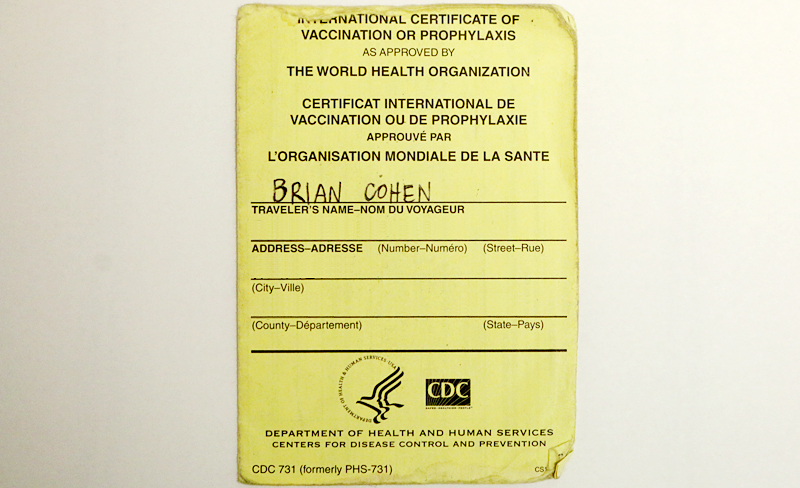
Nothing there is at all incompatible with what I had to say. In context, the WHO is saying that getting the disease once may not be a lifetime immunity to COVID guarantee and shouldn't be used as the basis for issuance of something along the lines of yellow fever prophylaxis certifications like these [1].
I agree. In fact, its highly unlikely, as with coronaviridae we've seen that the milder the disease the less likely you are to obtain long-term immunity. Even SARS, a much, much more serious disease, gives you 2-3 years as per my reference.
However, that's not what GP was arguing. GP argued broadly that "people who test for antibodies [may not be] immune to future infections." That's extremely unlikely. The question is how many people, and for how long, and then how do we utilize that information. Broadly speaking a positive test for antibodies means you're pretty likely immune at the time the test is taken. Of course the question is how that antibody response changes over time.
I was pretty clear about that: "Generally for as long as you show antibody response you won't be re-infected because that's what antibodies do."
The WHO is saying don't issue one-off certificates of immunity for life on the basis of testing positive for antibodies at one point in time before we know more. I agree.
I suspect a round of infection is likely to tide us over to a broad vaccination program, but we need a study.
""There is currently no evidence that people who have recovered from COVID-19 and have antibodies are protected from a second infection.""
They were prompted to issue this because some people were touting this idea of immunity being granted perpetually and allowing people to safely return to work.
"Broadly speaking, a positive test for antibodies means you're pretty likely immune at the time the test is taken."
That's in complete contradiction to what the WHO is saying. Read carefully: There is no evidence.
You're using circular arguments to provide bad information. Something you've consistently been doing.
"...but we need a study."
Why? You've said it's unlikely to be different than other viruses. Of course we need a study, because we don't know.
There is currently no evidence of X does not mean X is not true. It just means there's no evidence of X being directly true yet. Nothing I said contradicts the WHO.
What I said was that we can reasonably infer from similar coronaviruses (including both more and less severe ones that are up to 90% genetically identical) that immunity is conferred. Also from other viruses. We shouldn't base our global health policy decisions on that until we have conclusive evidence but there's no reason for you to continue with the messaging when all evidence points to immunity being conferred for some duration of time.
Specifically what I said was that we do not have enough evidence to issue prophylaxis certificates, but that chances are good immunity is conferred based on studies of very similar diseases. I also stand by the fact it would be hugely surprising (totally novel) that any of those testing positive right now are actually re-infections due to the limited timescale involved.
Seeing smoke doesn't mean there's fire, but it means there's a pretty good chance of fire. Yeesh.
All evidence points to (i.e. implies) but does not prove conclusively yet because studies are under way. Is there some disconnect in your reading of this? This is absolutely how science works. You identify something likely to happen due to a preponderance of evidence then you attempt to prove or disprove it by study. This is called inductive reasoning, and it's the basis for what's known as a hypothesis. An experiment or study is then conducted to prove or disprove your hypothesis.
You have not brought any evidence to the table. If there is a study that says SARS-COV-2, unlike the majority of (all?) viruses and all coronaviruses that results in immune response sufficient to clear the disease that then immediately dissipates, I'll certainly accept the premise.
Until then, a preponderance of evidence points (or suggests without proving conclusively) otherwise.
> That's crystal clear, but it doesn't align with your opinion that this is just like the flu in seriousness.
That is not my opinion. My opinion is that it's milder than the flu for young people (it is) [1], and much worse than the flu for older folks (it is) -- no citation needed, I assume. To suggest otherwise would be to ignore the evidence you claim to hold sacrosanct.
SARS-COV-1 has a two orders of magnitude higher fatality rate, so one would imagine the damage would be substantially worse. Is it really a stretch to believe that level and quantity of damage correlate both to recovery time and to mortality rates? Further, were there asymptomatic SARS-COV-1 cases?
SARS-COV-1 had an IFR (not CFR) of 14-15%. Broken out, it's less than 1% for people younger than 25, 6% for those aged 25 to 44, 15% for those aged 45 to 64, and more than 50% for people 65 or older, officials said. [1]
On the other hand SARS-COV-2 has an IFR of somewhere in the lower quartile of the range 0.1% to 1%, trending to around 0.3%.
Not to mention, I argued that lung function would recover, to which you said "strong argument, not [the much worse disease saw lung function recover in 6 months]" which implies you were actually supporting my argument not refuting it.
The coronaviridae family is huge, and fatality varies from ~0% in the 15% of common colds they cause to 0.1-1% for COVID to 15% for SARS-COV-1 to 50% for MERS. I can't stress this enough. SARS-COV-1 and MERS are not SARS-COV-2, they are much worse diseases.
Totally agree. The difference being a high false negative rate may be more dangerous because it may mean asymptomatic false negative carriers are still spreading the virus. The downside of a false positive is that people are self quarantining needlessly.
For a patient, a high false negative rate is usually worse. For an insurer, a high false positive rate is usually worse. The perspective matters.
> The difference being a high false negative rate may be more dangerous
At an individual level, false negative seems more dangerous. But at a macro level, a high false positive rate could lead to taking dramatically policy decisions
Sorry, I was editing my comment to add that very perspective just as you replied it seems.
I agree with the caveat that false negative rate is much more relevant for society when a disease is very contagious. Take measles, with an R0 in the teens. A high false negative rate can cause explosive growth in the numbers of people catching the disease, which I think is what makes it relevant to the COVID-19 scenario
What appears to be the potential danger of a high false positive is the narrative that it's safe to end stay-at-home because everyone already has/had it. Which seems to be the story being pushed with any talk of a lot of positives.
Nope, the narrative is "the mortality rate is similar to flu, therefore draconian measures aren't necessary".
Implementation examples: South Dakota and Sweden.
It seems clear that the infection rate has been severely under counted, meaning mortality rates are artificially high. Even better (from the standpoint of restarting) that "flu-like" mortality rate is concentrated in people over 60 years old.
What that all means together is the economy can easily restart, with the most vulnerable (old and sick) taking extra precautions.
This entire thing has been a fascinating exercise in how poorly central planning can work given bad information. The cure has been vastly more damaging than the disease.
It may have both for all we know. I really do think relatively little is known about this virus at the moment. We learn a lot everyday I'm sure, but it's still somewhat of a mystery. We don't like mysteries, which I'm pretty sure is what generates all the fear around the virus.
Even more relevant to this observation is that false positives aren't properly random: if the test happens to be falsely positive for some other rare virus it's very much possible that the entire prison was hit by that virus, creating a cluster of connected false positives.
Want to make a bet they won't develop symptoms? Or at least please help me understand how can you compare these two populations with wildly different average ages, preexisting conditions, etc...


There was a nursing home in Massachusetts which had 51 out of 98 residents testing positive but asymptomatic in early April. While this sounded encouraging in the sense no one was critically ill because of coronavirus, a few weeks later 19 had died and about 30 more had tested positive.
Let’s wait a month until there is a clearer picture about the impact of the virus on a particular population of people.
https://www.boston.com/news/local-news/2020/04/04/coronaviru...
https://www.wcvb.com/article/85-of-patients-at-wilmington-ma...