Why the obsession of economic growth? In Sweden we currently have negative prime interest rate and people have higher salaries than ever and housing prices are all time high.
This greed doesn't lead to less global warming or happier people. I think politicians and economists should start thinking about what actually makes people happy. Economics is efficient management of resources nothing else. Giving the population ability to stay healthy with affordable health care, moderate taxes and stability should be a main priority.
One alternate question might be, "At what point in time do you consider the economy to have become 'big enough' that you don't care about growth?" Today? 2000? 1990? 1970?
The people who might think today is "big enough" might also have thought that say 1990 was big enough, and yet very few people would want to be limited to 1990's tech / culture. It seems reasonable to imagine that people in say 2050 will look back on benighted 2015 and marvel at the shit we had to put up with. What gets us from today to 2050? Economic growth, which is likely tied into lots of other things (like science, production, entrepreneurship, etc.).
Can you? How can you have technological or scientific advancement without someone to pay for it in advance? Who would pay for it without a reasonable expectation of getting more out than they had to put in?
(For some reason, I'm reminded of the Superconducting Super Collider and the western invention (discovery? reverse-engineering?) of porcelain.)
I'm going to leave the idea of "cultural advancement" alone, 'cause I can't easily and convincingly define it or figure out where it comes from. And I don't believe anyone else can either.
Some advancements just redistribute money from an older incumbent to a new one (that will want to research it).
Anyway, there are plenty of technological developments that bring money to their creator, bring positive overall wealth to the population, but counts as a negative at the GDP accounting. I guess that's the cause of lots of the "let's not care about growth" cries. Well, let's fix our GDP measurement first! (And yes, I know there are several people working on it.)
> How can you have technological or scientific advancement without someone to pay for it in advance? Who would pay for it without a reasonable expectation of getting more out than they had to put in?
Value is not the same as growth. We may pursue technological advancement because we think it will provide more value than whatever assets we have on hand. Continual reward is not the same as continually increasing reward. Continually increasing reward might be good, but at some point that goal may come at too great a cost.
Which leaves us in a fair quagmire when you have substantial gaps between discoveries and engineered products (e.g. quantum theory -> semiconductors -> the computing revolution).
I have discussed this with friends recently. Why do we need growth?
I don't need a faster iPhone, or more tech. I honestly don't see my life being any better for the last ten years worth of "growth" (much of which seems to have been pumping up asset prices).
I would quite like to relax and coast a bit in life, but with the constant chasing of growth by everyone else, standing still means you will get left behind (i.e you will become poor).
I think you're simply demonstrating that it's incredibly easy to take technology for granted and not realize how much it has improved our lives just within the last ten years.
Very simple example: back in 2005, most people had to print or memorize directions when they were traveling somewhere they didn't know. A few tech enthusiasts had discrete GPS gadgets, but navigation was a manual and tedious (not to mention dangerous) process for most.
Today, almost everyone carries a device that can quickly and reliably find directions, and dynamically re-calculate them. I don't know about you, but I do a lot of driving on my own and this has improved my driving experience considerably.
Now, you could argue that incremental improvements in technology (e.g. faster CPUs, more RAM, etc.) don't actually improve quality of life that much. As someone who is still rocking an iPhone 4S, I agree. It's sufficient for my needs. But incremental improvements tend to be "placeholders" while more significant technology is in development, so it's fine that they happen.
Also, those "incremental" improvements often lead the way for more advanced applications of the device. To carry your example, at some point GPS is not feasible because, off the top of my head:
* Screens are not good enough.
* Processors are not fast enough.
* Radios are not sensitive enough.
* Data storage isn't small enough.
* Batteries aren't dense enough.
It took these things all converging with "incremental" improvements to allow the major advancement of consumer GPS.
Maybe you don't, but lots of people do, as evidenced by the fact that they pay for it. If you don't need it, then don't pay for it.
> the last ten years worth of "growth" (much of which seems to have been pumping up asset prices)
This is true, but faster iPhones and other tech weren't what did that. Investment banks did that, by playing risky zero-sum games with other people's money.
> with the constant chasing of growth by everyone else, standing still means you will get left behind
>Maybe you don't, but lots of people do, as evidenced by the fact that they pay for it. If you don't need it, then don't pay for it.
That's not really how it works. I will get a new phone when mine dies because (A) I need a phone and (B) the phone I have isn't being made anymore.
Does this means I am paying for 'more tech'? If you do not keep buying new stuff, you don't stagnate, you regress. If I don't want new technology, I have to go with no technology, not the same-old technology.
> I will get a new phone when mine dies because (A) I need a phone and (B) the phone I have isn't being made anymore.
But you'll still have a pretty wide range of choices; last I checked, not every phone available was a smartphone, let alone an iPhone. Granted, the exact model you had before won't be there, but that's true of just about anything. My car is a 2002 model; I'm going to have to get a new one pretty soon, and I certainly won't be able to buy the same model. But I'll still have a pretty wide range of choices; it's not as though I'll either have to buy a luxury model or go without.
> If you do not keep buying new stuff, you don't stagnate, you regress.
Well, of course; stuff wears out and dies, so you have to get new stuff, and the new stuff won't be the same as the stuff you used to have, because stuff is always changing. Everything wears out eventually; that's just a fact of life. But nobody is forcing you to get the fanciest phone available, or the fanciest anything else.
"How much is internet?"
"40 euros"
"How much is internet with a phone contract bundle?"
"40 euros"
I was perfectly happy with my Nokia. Battery lasted a week. I could bounce it off the ground.
The smartphone can be useful at times, but at other times it is so frustrating to use it cancels out the benefit. And since everyone else is using whatsapp, I might as well join in.
I take my pleasure in life from things outside a 4 inch screen.
So you'd be happy without the last 10 years, with your iPhone that was initially released 8 years ago -- and which promptly increased the cell phone market from race-to-the-bottom "dumb phones" to high-margin "smart phones"?
As someone who owns an iPhone, I don't think it's really substantially improved my quality of life. It makes some things more convenient, but doesn't really enable me to do anything I couldn't do before with other separate devices, and it can be a major source of distraction at times.
Would you be willing to test that...? I.e. Would you be willing to give up the iPhone for a dumb phone for 12 months? What if we collectively donated to a charity to make it more enticing?
Not the GP, but I'd be happy enough to do that. Then again, my personal computer is a ThinkPad T41 I bought online for like $100 recently when my T420 died, so maybe I don't count? But honestly, so little of my quality of life comes from tech advances (though I do love me some computer science, and work with computers every day).
I did this a year or three back, and the only thing was that with the amount of travel I did, the mobile maps were too useful. If I didn't travel, I'm pretty sure I'd be fine without a phone.
> I don't need a faster iPhone, or more tech. I honestly don't see my life being any better for the last ten years worth of "growth" (much of which seems to have been pumping up asset prices).
I'd be careful not to confuse the limits of your imagination with the limits of reality.
I've seen this sentiment many times in many different ways and it has never been accurate. It's easy to feel like now is different and we've never been here before, but we have. The key isn't that you don't need a faster iPhone or faster computer, it's that you need them. There will always be another iPhone/computer, whatever that will be.
The world as a whole is in one of its most peaceful periods ever. The 1990s saw a genocide in Europe, horrific civil wars in Africa, before that you had the Cold War with all of its attendant problems.
Growth and Peace aren't mutually incompatible aims.
There has been a lot of growth in the States and the UK over the last 40 years. yet within both of those countries inequality has grown a lot. Few people under 40 can afford to buy a house in the UK these days, as opposed to 20 or thirty years ago.
Maybe I am just more politically aware than I used to be but I feel discontent is rising.
If you want to freeze on ten years back, there's nothing stopping you from getting an old flip phone.
Or if you want to freeze on 8 years back, nobody will prevent you from buying a iPhone 2G.
It sounds like you are saying you won't do that because you don't want to be "left behind", so you'd like everyone else to stop moving forward to accommodate you. But that's their choice, just like using an iPhone 2G is your choice.
"We have too much progress, can everybody just slow down a bit here!?" - first world problems :)
The "iPhone" worked on 2g networks, so I call it the 2g to be clear. The same way the "Xbox" is now called "Original Xbox", to distinguish it from the others, esp. the Xbox One.
I need computing power equivalent to several thousand million human brains within the physical space of my home by 2050, and fitting in my pocket by 2075.
Growth and technology are actually reducing the difference between rich and poor in almost every aspect of life.
Between 1920 and 1960 the only people who could travel quickly around the world were the super-rich. With the advent of the turbofan engine, and the widebody jet, quick and comfortable travel became accessible to the general public.
Cell phones and the internet are another paradigmatic case of this. It used to be that only people with a great deal of resources could get quick answers to uncommon problems, but now everyone can get those answers from a device they carry in their pocket. You can communicate more easily than the ultra-wealthy were able to only 20 years ago. Most Americans have access to communications technology on par or above that of the president.
There are many different examples of this, and the best description of it may be the following quote by Schumpeter:
>"Electric lighting is no great boon to anyone who has enough money to buy a sufficient number of candles and to pay servants to attend them. It is the cheap cloth, the cheap cotton and rayon fabric, boots, motorcars and so on that are the typical achievements of capitalist production, and not as rule improvements that would mean much to the rich man. Queen Elizabeth owned silk stockings. The capitalist achievement does not typically consist in providing more silk stockings for queens but in bringing them within reach of factory girls in return for steadily decreasing amounts of effort."
>>Growth and technology are actually reducing the difference between rich and poor in almost every aspect of life.
It seriously annoys me when people say this, because it's so incredibly short-sighted. It's only in terms of physical, tangible standard of living factors. Travel, as you noted, is one of those. And yeah, everyone has refrigerators in their homes nowadays. Yay!
But being ultra-rich gives a tremendous amount of intangible perks, such as the ability to greatly influence public policy and the ability to afford top-notch legal representation, which lets them get away with serious crimes that would put normal people like you and I in jail for decades. There's also inter-generational perks. For example, children of ultra-rich parents can afford excellent education and are much more likely to get into the top schools.
I can go on. The fact is, the differences between the haves and the have-nots today are vast, and they are getting bigger every day as wealth inequality increases. Yes, it is good that we have the basics covered for most people but beyond those basics things look pretty grim.
I agree that the rich still enjoy many advantages over the poor, but still believe that the difference is being reduced by growth and technology.
Up until the 19th and 20th centuries, only the very richest few could afford to learn to read, write, do math, and understand history. The increases in productivity and technology we have enjoyed have helped to reduce the differences in level of education, and any number of other aspects of life. You contend that the ultra-rich "are much more likely to get into the top schools", but you are missing the historical context which demonstrates that the level of education available to the middle and lower classes has been steadily increasing.
With regards to public policy and legal representation, we probably agree to some extent with respect to the issue, though we likely differ in paradigm. I would surmise from your comment that you believe the government could 'solve the problem'. The way that I see it, these are the areas where goverment has been most active in disadvantaging the poor and middle classes, and a reduction in the size and scope of government is the only way to systematically help level the playing field.
I think you're the one being short sighted here. You pull out the very few area where the rich still have an edge, but the fact is that in the vast majority of areas, the rich have lost insane ground.
First, these physical, tangible standard of living factors you so arrogantly dismiss. Cheap, ubiquitous travel means freedom to live where you want, even if that's more than a few hundred miles away, without sacrificing your family and friends. That was rare 20 years ago and almost unheard of 50 years ago. Except if you were rich, of course. Today, the rich can buy somewhat more comfortable and convenient flights, at extreme expense, but not faster ones.
As for refrigerators in every home? The alternative is shopping for fresh ingredients daily, or doing without them. You can't save leftovers for very long, so you need to cook daily. And speaking of cooling? 100 years ago, the king of England couldn't get an A/C unit at any cost, today they're perfectly ubiquitous.
Education? Yeah, there is some real differences here, but the bottom has gone up tremendously: in living memory, kids were pulled from school to help in the fields. Poor kids, obviously, the rich didn't go in the fields. Today, thanks to the mechanisation of agriculture, all kids can stay in school uninterrupted. And even the poorest kids can read by almost free electrical lights. Even 100 years ago, the rich would have to read by candlelight.
The rich can buy marginally better cars than you and I, but not by a lot. Fancier, but not really better clothes. Their houses might be bigger and fancier, but not more capable at keeping you and your family warm (or cool) and dry. Certainly, the rich have more luxurious options, but not really a lot better.
The richest man on earth can't buy a better smartphone than me or get a better signal than me - that's why those ghastly diamond-encrusted phones exist. But their text messages don't arrive faster than mine and they like the exact same cat videos as me on the exact same Facebook.
Still too vulgar and consumerist? How about the environment? Once, the rich enjoyed clean air, clean water and safe disposal of sewage by living in the country. But do you know why they dusted all the time in old books? Indoor coalfires are messy affairs. If you lived in the city (rich or poor), there would be no clean water, smoggy, dirty air and literally shit flowing in the streets. Today, even the worst tenements in the densest cities have clean, running water, flushing toilets and smogless radiators. The air might not be quite as clean as it could be, but it's a far cry from the smog-hell it once was - and a lot cleaner than just a few decades ago, thanks to better cars.
The perks you list were always perks of the nobility, they are not recent gains - but you're making the perfect an enemy of the extremely good. The much more interesting point is all the perks they've lost and are losing, and those are extremely numerous.
Actually, if you follow the discussion, it has already been defined in the comment I responded to:
>>The people who might think today is "big enough" might also have thought that say 1990 was big enough, and yet very few people would want to be limited to 1990's tech / culture.
What is being implied here is that we want economic growth because we don't want to be limited in tech / culture. I simply pointed out that this is a false association.
No you can't. If I invent a self driving car, economic growth is inevitable. What is the difference between now and 1800 other than technology and growth (hint, technology is growth).
Of course, there is also growth that doesn't come from technology. Like building shopping malls, employing people, and letting the economy operate at full tilt, producing things that we can then either consume, save (a form of growth), or spend on investment (another possible form of growth).
You might not think building a shopping malls advances society, but it's second order effects 100% do.
That's backwards; your example is one of economic growth without technological, scientific, or cultural advancement. By contrast, the invention of the laser didn't yield much economic growth for a long time because nobody was too sure how to commercialize it, but once the ability to produce an intense light at a single narrow wavelength got some utility, economic growth resulted automatically.
I donn't think that is actually the case. You may think, and I might have agreed with you, that at first blush building yet another insipid shopping mall does not necessarily yield any enhancement to society but after further thought I would tend to disagree. The "market" is where society comes together to mingle and it is also where goods and services are presented to the people who may not have had an avenue to receive them previously. The modern day mall is the modern day town square market of yesteryear. It is yet another avenue for ideas to germinate and goods to be exchanged. Someone will buy something that allows them to free up time which will allow them to spend more time thinking about something new or caring for someone who will think of something new.
Expansion is the only way forward and often everything can be measured in economic output.
How is it not an answer? He's saying that the "greed" described by the original commenter is the same source of innovation that's given us all of the modern amenities we enjoy today.
Conversely, I would say outright dismissing the pursuit of growth is not an answer.
> He's saying that the "greed" described by the original commenter is the same source of innovation that's given us all of the modern amenities we enjoy today.
And is life any better today than in 1990? Are we happier?
I think he's arguing that material possessions don't necessarily correlate to 'quality of life' and happiness.
I would personally be pretty happy without a car or computer. But I live in a ridiculous city that is sprawled out over hundreds of square kilometres with terrible public transportation, and live in a society where electronic communication is basically a requirement to do anything.
My happiest childhood memories where on my grandfather's farm. My wife's happiest childhood memories where in her small village in an 'under-developed' country. Today life in Canada is stressful as hell, and her country has been consumed by violence and corruption.
Things that you can do today that you couldn't do in 1990:
* Survive much longer with many types of cancer.
* Live a pretty normal life, more or less indefinitely, despite being HIV+
* See your grandkids that live in a different state via a high-quality video connection.
* Enjoy television shows that offer multi-month and multi-year arcs and are designed to be consumed by dedicated fans in order, rather than principally for syndication in random order.
* Vacuum your floors with a robot.
* Survive more car crashes dues to a variety of safety features.
Is life "better" today than in 1990? Sure, of course it is. Does that make us happier? I genuinely don't know. Most hedonic research strikes me as obvious bullshit. Maybe people's happiness levels reset to the norms around them regardless of what those norms are. Maybe you'd literally be just as happy if you lived in a medieval village with open-trench sewers and a pretty decent chance of your wife dying in childbirth and you doing hard labor for your adult life to a brief, decrepit old age. I mean, seriously, maybe you would! It's not outside the realm of possibility.
It's hard for me to argue that that kind of happiness means that there's no point to increased material prosperity.
While all those points are true, they are mainly because of advancing science, rather than economic growth. Those are partly interconnected, but there are also important differences.
The Internet as you know it is also a direct product of its academic background. That's why we have had network neutrality so inherent in its culture. That's why there are only peers, not producers and consumers. If it had been designed as a product, the network itself would never have been designed to be dumb with smart endpoints. (And there are countless examples of this.)
If Tim Berners-Lee designed the web to be a product, there would be a marketplace of competing web-like products, which in turn would have given us other features, but it would never have become societal infrastructure in the way it did.
Sometimes we need academia and science, sometimes we need products.
The question here is how to optimize between the two.
No. Advancements in science are where you show that it's possible to do something in particular, like control the level of HIV in someone's bloodstream or make a better airbag. Wonderful! But turning that knowledge into a technology that can be deployed to the people that need, and then actually deploying it, involves a lot of resources - both material and and labor - and those resources come with a price tag.
It's not like once we learn something in the lab we can just make it available to everyone for free. I mean, you could go to Wikipedia right now and read about, say, aeronautics and all the theory of how air flowing over a wing can provide lift, and articles on structural engineering and so on. But having that knowledge is not the same thing as having a plane, or having access to a plane ticket. If you would like to fly from A to B, you need a functional aircraft first.
No, they aren't. Those are all products, all produced for profit. They may depend on basic research, but basic research does not get products into people's hands, and basic research does not make people wealthy enough to pay for new products.
I am obviously not arguing against research, and I think your whole deal of arguing that there's some kind of tradeoff to be made between them is wrong. You can have more research and more economic growth. In fact, if you don't have more economic growth, it'll be harder to have more research, and to some extent vice versa.
This isn't to get embroiled in a real tangent about network neutrality. Nobody is advocating for any kind of particular regulatory framework for the internet, here.
The "academic internet" wasn't nearly as impressive as today's internet.
I am (un?)fortunate to have my first memories around the time of the first private networks being connected to the internet (late 80s).
Back then, the internet was run by academics.
It wasn't until the 2nd or 3rd round of commercialization efforts that it really became compelling.
So the structure of the internet is because of the academic beginnings, but the actual content (data, apps, etc.) are IMO b/c of desire to acquire wealth.
> Enjoy television shows that offer multi-month and multi-year arcs and are designed to be consumed by dedicated fans in order, rather than principally for syndication in random order.
This has nothing to do with economic or technical limitations. It has cultural reasons. SDF Macross aired in 1982 in Japan with 26 episodes in order and I'm sure there are even earlier shows.
> My happiest childhood memories where on my grandfather's farm. My wife's happiest childhood memories where in her small village in an 'under-developed' country.
Those are happy memories because you had a happy childhood, not because there was less "stuff."
Some of my happiest memories are of biking through the suburbs to go hang out at the mall. Why? Because I didn't have a care in the world back then.
I would say that outright dismissing any concept is not an answer.
I do have a problem with equating greed to innovation and cultural growth. Greed, in economic terms, optimizes only for the accumulation of wealth. Many technological and cultural advances would do nothing to amass wealth and would be missing in a society focused solely on economic growth.
No, the commenter asked a specific question about why we optimize for growth at the apparent cost of a negative interest rate, and rapidly rising salaries as well as housing prices.
"When do you consider the economy big enough?" is rhetorical question which doesn't even touch on the trade-offs apparent to what's being asked.
Amazingly well written replies everyone! Wonderful community!
I agree that the economy might not be "big enough" yet. And yes I agree that we need more progress and probably more growth. But do we need to be in a hurry?
It surprises me that none of the commenters has mentioned global warming - a side effect of economic growth.
So, what do HN readers think about the correlation between economic growth and global warming? Should monetary policy not bother about including global warming side effects due to increased co2 pollution due to economic growth into their economics equations?
What you are grappling with here is not "have we got a big enough economy". Global Warming does not come from value creation, or the statistical proxy that we call Economic Growth. It comes from burning fossile fuels.
In terms of value, what we have learnt from the last two decades is that a few people with computers can create a lot of it, with negligible impact on our planetary ecosystem. Clearly it makes our lives easier, and gives us more "stuff".
However, our physical existence still depends on fossilised energy to an alarming extent, and policymakers are still unable to wean us off it (witness the fuel subsidy debates in Egypy and Indonesia), or simply unwilling to. You can even say that we use so much of it due to lack of effort, i.e. an unwillingness to actually grow the economy enough by finding substitutes. Because that would involve people doing more work to learn the right technical skills, and that's unreasonable to demand, right?
In fact, it might lower the environmental inpact, since an app with driving directions can make our car journeys more efficient.
sorry to sound like the hippie, but doesn't the official metric is mostly influenced by monetary institutions? which generate none of your grandiose example (science, production, etc)
Unemployment in the US is around 5.5%. Growth is correlated with jobs, expendable income, etc. So its important if you want to lower real unemployment.
>In Sweden we currently have negative prime interest rate and people have higher salaries than ever and housing prices are all time high.
France went, roughly, this route a decade or two ago. Now they have riots in the streets because young people can't find jobs. Youth unemployment in Spain, UK, Greece, Italy, etc are also scary. The socialist style government does a good job governing the problems of today it seems, but the capitalistic styles does a better job of taking care of the future and the young trying to enter the workforce.
Those nations saw their economies as 'good enough' at one time. They were paying out big salaries and pensions to their public sector unions and overtaxing their corporations and made their budget. Now they're in hysterics about employment, real estate bubbles, youth riots, and lack of growth.
>>In Sweden
I'd also be concerned about your .8% GDP spending on military, which is fairly low, especially in an age of a Russia that routinely sends subs into your territories and annexes lands not too far from you guys. Its weird that we're still applauding the welfare nanny state when its been shown to be fail past a certain point, especially in a country with near 8-9% unemployment. Also your GDP has been raising steadily, so I find it hard to believe that growth isn't' a contributing factor to what you perceive as success:
If that was a flat graph you wouldn't be chiding us on the internet. You'd be selling shoe shines for gruel or your poor parents would have elected to not birth you.
Also, are you an older established person? Wonderful, but please don't throw down the very ladder that you climbed:
Today:
Still almost 22% youth unemployment. Countries that care about growth, like the USA, have half that level. So yeah, maybe you should care about growth.
That's an official statistic (US Bureau of labor statistics) that is, in all reality, fiction. Might want to look at ANY other analysis, other than the announced statistic. Like simply comparing the (est) population to the (est) jobs. Turns out it's more like 10% at best, but that's not the end. Yahoo, Experian, Amazon, etc. The vast majority of the tech employed have become contractors. At least be reasonable enough to do your research.
You seem to be woefully glib about topics you haven't been following. Growth hasn't helped the situation as there hasn't been much at all, if any. Rigid financial systems have failed and will do so again if the interest rate (inevitably?) spirals out of control. The executive branch talking heads and investing-in-debt schemes have been paying off for the last few years. It's been increasingly difficult to determine what lengths the fed will go to, in stabilizing the economy and maintaining a positive spin.
>That's an official statistic (US Bureau of labor statistics) that is, in all reality, fiction.
and the Swedish one is 100% honest? Oh okay. If you bothered to understand this topic you would know that there are different categories of unemployment (U6, etc). I chose the one that best fir the comparision with Sweden.
>You seem to be woefully glib about topics you haven't been following. G
and you're yet another anti-US HN "expert" unwilling to accept the facts or understand how national economies work. That attitude will get you precious upvotes here (I see you got your token anti-fed comment in, so on HN bingo you're doing pretty good), but its not remotely tied to reality.
Easy. Essentially unknowable/unpredictable future growth expectations/extrapolations were already baked into present-day voter promises, welfare obligations and many bank/insurance/pension calculations, plus current "financial asset" valuations. Now the big scramble is on to will said growth assumptions into actually happening, lest "all bets will be off", literally.
HFT are making huge profit margins - their entire industry profit is estimated at around $1bn, or a percentage of what a single large financial institution will make in a year. It's all relative - they can only make so much profit before they move the market too much themselves, they are limited by their size.
Your pension fund is not trading in a way which is significantly adversely affected by HFTs, the CEO of Vanguard is even on the record as saying that HFTs make his traders more efficient. Fund managers employ their own dealers to ensure best execution, if HFTs were causing significant losses you can be sure they would be raising hell - and that regulators and governments would listen.
>"Banks do not produce, they have no income from dividends, so how they earn?"
They provide a service. Just because they don't "produce" something by processing raw materials, or less-processed goods, doesn't meant they're not providing something of value to someone.
But, additionally and simplistically, they make money from giving out loans at higher interest rates than what they give out at in deposits.
They don't just give out loans, they create brand new money. They also have a state-enforced and -backed monopoly on this creation of new money. So they do "produce", it's just that what they produce is more or less "fictional" violence tokens.
They provide currency, which can be used to acquire capital.
Do not confuse this with providing capital. The person who gives you a fence-painting robot is providing capital. The person who gives you 10000 coupons for a free fence-painting robot is not providing anything, if the person who issued the coupons does not actually have any robots.
Banks lubricate the machinery of business, theoretically making productive work more efficient. To the extent they do so, they can reasonably capture a share of those gains.
But once they are trusted in that capacity, they are now in a position to take money by less-honest means, in a manner largely indistinguishable from their legitimate functions by the casual observer.
That's the theory and few rational people would argue that those services are necessary. But we've been in a tail-wagging-the-dog situation for a while now. The industry seems to believe that they're entitled to an increasingly large share of the world's wealth. They've seemingly forgotten that they're a facilitator of progress and don't represent progress in and of themselves. They recruit the best and the brightest to create ever-more-complicated financial instruments robbing society of the contributions those engineers/scientists would have made elsewhere.
Much like the same cellular mechanisms that sustain life become cancerous when there is unchecked growth, the same financial apparatus that we need to facilitate progress becomes cancerous when its growth is unchecked and it loses focus of the purpose that it serves.
1. Banks do not need deposits to lend money to ordinary people. They lend money from FED, which 'prints' them.
2. If interest rates are low then Banks profits should be also low because of small difference between deposits and lending rates. Am I right?
3. Just like casinos in Vegas need capital donors, the ultimate casino also needs capital donors. Don't want to play on Wall Street? No problem, your pension fund (dumb money) is more than enough.
We have nonnegative gains in efficiency and we have population growth. If those are not reflected in the monetary base, then the result is a trend in the direction of deflation. That presents a set of problems, challenges to very deeply established assumptions about things like government, business and personal debt. Deflation leads to instability, as people who want to work cannot - and not for a good reason, but because of monetary "evils".
Happiness is rather a dangerous standard to use - it varies widely. Material comfort is more appropriate for discussions involving economics.
Low interest rates also contribute to income inequality - if the market interest rate is 0.5% and your business produces returns of 5%, you're now a "rock star" business, and will attract "too much" investment. As there evolves winners and losers in that game, income inequality rises.
You might enjoy reading the Austrian Economics take on this at the mises.org web site. Their front page has a few articles on how (sometimes) deflation is just fine.
This ( plus nearly all of Rothbard ) is where I disagree with the Austrians. I don't think specie-fever is particularly an Austrian .. opinion but they're also highly correlated - Austrians tend to be fond of gold. If I win my bet, specie is pretty dramatically a bad idea, as the interwar stories show well enough for me. Austrians in general don't seem to grasp that flows matter as much.
When I want to be hyperbolic, I will accuse deflation of being a big contributor to WWII.
I just don't like the idea of the level of currency in circulation being a drag on transactions. Throw in that how debt can be a real problem for people, and I just can't go there. I rather giggle at the "Hayek and the suit" story, although I admire Hayek greatly.
I'm closest to Friedman/Fisher/(these days)Sumner. Mainly because the story is one of poor instrumentation leading to policy that doesn't do what we want, which suits my biases.
"Interfluidity" did an ( I think ) brilliant piece titled "Depression Is A Choice" in which they mused that deflation may well reflect our revealed preferences.
It is a large part of how people in the US make money. Most people have their retirements tied to the stock markets (401k, 403b, and other options are basically just a huge collection of stocks, commodities, and bonds). If growth doesn't occur, the markets don't do as well and may even fall causing a LOT of people to take a hit in retirement funds.
>If growth doesn't occur, the markets don't do as well and may even fall causing a LOT of people to take a hit in retirement funds.
It isn't just about "markets". There are actual businesses underlying those financial assets that require economic growth to expand, hire people, pay wages and provide an economic return to their owners (including shareholders).
You make a very good point. However, the obsession with economic growth itself isn't the problem - it's how economic growth is measured. As an example, if a hurricane sweeps through Florida doing billions in damage, Florida is surely worse off, but because of the rebuilding activity that follows, it will register significant growth.
As you state, we need to think about what makes people happy. Economics is a great tool to do that, but it will require a rethinking of how the economy is measured.
As you can see in the Wikipedia article, there are actually many different interpretations and views on whether or not that rebuilding adds value to the economy.
I disagree. The economic growth is very much the problem. You can multiply abstract integers all you want and everything will be fine, but unfortunately the economy is coupled with the real world. Exponential growth means exponentially increasing resource use and energy needs, which is simply unsustainable. We need to cut off that exponent, or else the only singularity we will hit will be the brick wall of "oh shit, we just run out of habitable planets".
I think (macro) econ is a lousy tool for measuring happiness. Micro might be. Now, some parts of the various econs - like the theory of revealed preferences* - may well be useful in measuring or talking about happiness but taken as a while, it is IMO incumbent on economists to be humble about this.
*which teaches us that what people say and what they do are two very different things.
This reminds me of when Windows Vista (or was it Windows 7) came out, Microsoft claimed it would lead to more growth, through all the upgrades that would need done. So more work needing done leads to more "growth". There is something backwards in that thinking to me.
From 2001 to 2014, Sweden's GDP per capita went from $26,000 to $60,000. Surely you didn't need any of that growth, right?
It's easy to soap-box about greed, when ~90% of the world is far worse off than you are.
Sweden also has a consumer debt vs disposable income ratio of 180%, one of the highest on earth, and it's brewing into a crisis. Without the high salaries, courtesy of past growth (since Sweden's economy hasn't expanded since 2008), Sweden would currently be in a crisis economically due to the very high individual debt levels. Most likely in the future to deal with those debts, Sweden will have to slash its standard of living, or boost its growth. Nobody likes to go backwards in comfort, and that's why the 'obsession' with growth - you can't stand still for very long, you either have to go forward or you will go backwards.
This is not a good thing and I'm not sure why you seem to think it is. You talk about happiness - one way to help the "happiness quotient" is affordable housing.
It's true that all time housing prices is not a good thing. But low interest rates helps keep the Swedish housing bubble growing. Low interest rates encourages people to invest big but when the interest rates go back up people risk getting in financial trouble.
That would answer my question about the availability of loans: there is too much money available. Sounds like Sweden is going to join the rest of us in the Twenty-first Century soon.
Because of population growth, which is slowing but far from finished. If the population is getting larger and the economy is not, then there are fewer economic resources available per person. Also, even in a stable population, if there is no economic growth then there tends to be an increase in economic inequality, because then economic transactions are zero-sum in the aggregate (by definition) and so the people who have more money at the beginning have leverage in any economic negotiation, ie they are more likely to be price makers than takers.
Economics is efficient management of resources nothing else. Giving the population ability to stay healthy with affordable health care, moderate taxes and stability should be a main priority.
Those things are economics problems. 'Efficient management of resources' is really quite complex, even if everyone were agreed about what we consider efficient, which we're not.
Because not everyone has a Swedish lifestyle, and you seem to be stretching the upper bounds of immigration. So how do you propose dealing with the 1 billion+ people in the world who need their stands of living increased?
Capitalism has worked wonders at relieving poverty across the globe. It may have led to wage stagnation in outsource-able jobs in the West but it has led to a huge global poverty reduction. Even in Europe it has led to mass improvements in jobs that can't be outsourced, including plenty of blue collar jobs.
Maslow's hierarchy of needs is 72 years old now, it isn't rocket science, people can only be happy in their circumstances if their more basic needs are met.
economic growth, albeit imperfect, is a measure of things getting better for society. So, we should worry about worldwide economic growth, but not necessarily Swedish economic growth. Another point is, lack of growth is a leading indicator of the situation getting worse in the future, even if it is pretty good now. So, yes, economic growth is an imperfect measure, but we have few if any alternatives to economic growth in terms of assessing how things are going in an objective way
"Growth" has absolutely nothing useful to say about "things getting better for society."
Things get better for society when jobs pay well, high quality education is freely accessible, talent and creativity are rewarded, cost of entry for entrepreneurship is low, and ecological support systems are stable.
There's nothing even remotely difficult about measuring these factors.
"Growth" is just a convenient way to disguise increasing inequality and decreasing economic freedom for the majority of the population.
If the growth is never distributed it's a useless metric.
try to think in terms of statistical models, rather than absolute statements. Imagine a continuum in which things you mention receive a numerical score. Growth is a number. It is a number which will have a non-zero correlation with the numerical scores of the things you mention. You can also build models that try to forecast growth based on those scores, and vice versa, forecast those scores based on growth. Once you think in those terms, you can dispense with terminology such as "irrelevant", "useless", "absolutely nothing", etc.
Inequality seems to be mostly inversely proportional to growth.
Low interest rates are fertile soil for inequality. If I can just buy Certificates of Deposit and live off the interest, instead of having to invest directly, that seems to me to be more egalitarian than less. Low interest rates brighten the line between us ordinary people and professional investors.
One big reason I want economic growth is because I want to live a lot longer than the standard 80-90 years in perfect health, and I want the same for my loved ones. Affordable health care is great, but what you get for it right now frankly sucks. No matter how affordable your health care is, or no matter how rich you are and how much money you pour into it, you're going to die fairly soon, and probably go through a lot of horrible problems on the way.
I want health care that's so advanced it's "perfect." I want people to routinely choose when to die rather than having it thrust upon them. I want forgetting the names of your children to be as weird and old-fashioned as dying of smallpox. The research and development needed to get there has a high economic cost, and growth is how you can pay for it.
Giving the population ability to stay healthy with affordable health care, moderate taxes and stability should be a main priority
You can only do this with growth. In 1700 you couldn't afford good healtcare even if you were king. It simply didn't existed. In 2015 you could't travel on roads without the constant threat of death. In 2017 you couldn't use VR to keep in touch with loved ones. In 2030 you couldn't live in old age independently because of fatigue and weakness. Now in 2100, we have solved all of these problems. People are healthier, taxes are low and declining. People are happy, safe, and free to do as they want.
This is why I am thankful for progress. What a time to be alive.
The economy needs to grow as quickly as the population because otherwise there would be a reduction in wealth on the individual level.
Also, if inequality remains the same the lives of those on the bottom of society see their lives improve.
Less essential, but the people here should appreciate it, growing the economy means that young people have the opportunity to develop themselves professionally, e.g start start-ups.
Germany's population essentially hasn't increased in 40 years. Their nominal GDP has increased by 15 fold in that time (even after accounting for inflation it's a significant expansion, all due to productivity gains).
Well, it probably will if a large number of people leave and that doesn't have to be bad news for the ones that stay. Of course, that will depend on the specific situation. I can't come up with an example where there was a large decline in population in an area on a voluntariy basis.
Because economic growth is the only way to pay off the massive amounts of debt that currently exist. The US needs to constantly grow and acquire more and more resources, labour and capital or else it will cease being the way it currently is...
Inflation also is a way to get rid of debt. A few years with 10% inflation would do wonders for the debt of most countries, provided that their debt is in their own currency.
The correlation between inflation and lower growth is not as strong as one would think. See for example the graphs on pages 22-23 in http://www.frbsf.org/economic-research/publications/98-1/15-... and the number of 'generally supports', 'probably' and 'may exceed' phrases in the conclusion.
> The correlation between inflation and lower growth is not as strong as one would think.
Of course not. Inflation is a symptom and not a cause. If lower inflation or even deflation lead to growth, then a penny should still have value, and a dollar should be a good amount of money (we've abolished 1 cent coins altogether, and a dollar buys very little). But our economy has grown a lot since the 1950's, and inflation has happened.
Inflation is caused by many things. In Zimbabwe's case, they tried to print money to finance various things. With no underlying value, the money quickly devalued.
In the case of Canada, the US and other western nations, we've enjoyed economic growth, but because demand for goods and services has generally outpaced supply, prices have gone up. Right now where I live, an 'average' house costs $450K.
Anyhow, thanks for the link, but I've spent too much time looking at Solow equations for my liking (currently doing a degree in economics).
Zimbabwe was a failed state before it had hyperinflation. i won't say that we get good answers on the difference between moderate and hyperinflation, but I am sure there is a difference.
Hyperinflation is just a good apocalyptic narrative device, and people (ab)use it.
Inflation would be a way to get rid of debt, but it literally takes money from the poor and working class and gives it to the rich.
10% inflation is equivalent to a person's salary going down by 10%. Also, any savings you had would be eaten up by 10%. Inflation is the same as taking people's money to pay debt. It's not some magic thing that makes debt go poof.
If you manage to combine a x% inflation with a x% rise in welfare payments and of worker's income, people with relatively little money in the bank will not suffer much. That includes the poor and the very rich (who likely will have invested a large fraction of their savings).
The clear winners will be those with relatively high debts, the losers those who have been saving, but not investing.
Is it fair to tax the ants while rescuing the grasshoppers? No, but if the country as a whole is a grasshopper, it may be the best one can do.
A side effect of this strategy is that it teaches ants to invest, rather than put money in the bank. That's another reason why many countries aim for inflation.
The unfortunate side effect is that it shafts pensioners who should not be investing in equities because of the time scales involved. The UK (though a hefty dose of electioneering is involved) is offering bonds to pensioners which pay a higher coupon to offset the low gilt returns available.
What part of this post suggests that Bernanke is aimed at growth?
Bernanke states the goal of the Fed setting rates is full employment. Low interest rates encourage spending, which cause more people to be employed. Lower unemployment is generally good.
Indeed. Endless economic growth comes atthe expense of negative externalities. Companies are incentivized to produce more - or their competitors will - by using up more of the planet's resources and producing more waste, forever. This is unsustainable. At current rates, how long can this planet sustain our growth in consumption?
The main underlying cause of this is population growth. If countries can learn to break their dependency on a social security pyramid, by leveraging the increased productivity that automation enables, then countries like Japan with a graying population can in fact become nations of fewer, more affluent people.
Scientific and technological advancement does NOT have to depend on more consumer crap marketed and sold to more people.
There are two very different senses of "growth" here.
The good sense is that better ways of doing things is "growth" -- for example cheaper more efficient solar panels can slow global warming, reduce centralized power, etc.
The bad sense is increased GDP, more stuff, etc. There's no strong reason good growth has to produce bad growth. We can decouple them.
Negative interest rates doesn't mean no loans are available, it means the central bank is charging banks for the deposits they hold and typically that gets passed along to savers.
One theory behind it is to force savers to spend, by adding a cost to their savings. And to force banks to lend, by adding a cost to their cash holdings.
Something the parent comment doesn't seem to realize, is that having negative interest rates is a sign your economy is not functioning properly. If you have to resort to negative interest rates to keep assets from falling in value, and to drive consumer spending or bank loans, then you're already in deep trouble. Sweden's negative interest rates are likely an indication that a storm is coming for them; were they to raise interest rates it would cause a recession; and if they don't raise interest rates, their real estate bubble will continue to inflate until it explodes. They have to take their medicine one way or another.
Because central banks (CB) print money out of thin air. That "money" is debt. You print 100, you owe 110 counting interest. How can you pay the 10, if you only printed/exists, 100? You can't. You, me, everyone, is a debt slave. "Times are good" = CBs print a lot of money (out of thin air). A lot of non existant interest too, but you don't notice, cause more money/debt is printed. "Times are bad" = Enough is enough, CBs stop printing, you have to pay/give back, what doesn't exist, ie the interest. Defaults are unavoidable, and the people on top, pick up whatever they want on pennies to the dollar.
To put it simply: You print 100 out of thin air. There is no more money in the world. Next year, you owe 110. Where can you find the 10? (Spoiler: You can't.)
Um, no. I agree that printing money has bad side effects, but this is not one of them.
Here's a better way of looking at it. You currently have a money supply of 1000. That money supply is matched up to 1000 units of goods and services. Assuming this situation has been stable for a while, there will be some set of equilibrium prices.
Now you print 100. The total money supply is now 1100. But the supply of goods and services has not changed. So the first order effect is to raise prices, since you have 1100 units of money but only 1000 units of goods and services, so the previous set of prices is no longer in equilibrium. (Plus, whoever got the 100 that you printed got to spend it first, so they got the advantage of the lower prices; in other words, printing money is a way of favoring some economic actors over others.)
But there is also a second-order effect--at least there is according to Keynesians. If you print money, that makes people think there are more goods and services--i.e., that the economy is growing. So they are more willing to take economic risks--hence growing the economy. So, according to Keynesians, if you print just the right amount of money, you can stimulate just enough growth to match up with the money you printed. In the above example, if we suppose that the 100 units of money printed stimulated just enough growth to increase the supply of goods and services to 1100 units, then 100 units was the right amount of money to print to keep prices stable.
Nowhere in any of this is there any "interest" on the additional money printed. That's not the bad side effect. The bad side effect is that, in reality, the amount of money printed is never just the "right" amount to stimulate the matching amount of economic growth. It's not even clear if printing money can be counted on to stimulate economic growth at all: the Fed has been printing money at a snappy pace for a number of years now, and they are still saying the economy is stagnant.
(It's true that prices have not gone up very much, at least if you believe the CPI numbers; but that's because banks aren't lending the money that's being printed--they're hoarding it in their cash balances, because they don't want to be caught short if there's a downturn. So the actual money supply, the supply that affects the prices you and I pay for ordinary items, is considerably smaller than the total amount of money that's been printed.)
I think you are being a little unfair to Keynes here.
Printing money doesn’t make people think that there are more goods and services. Money is a real thing, is a medium of exchange and there is a demand for it. If you have not enough supply of it the economy suffers.
Also, it’s deserved to note that the preferred Keynesian way of stimulating the economy is by fiscal policies (investing from the government), and not by “printing” money, but that is not possible in Europe or the States because politics.
> Printing money doesn’t make people think that there are more goods and services.
It makes people think they are wealthier, which amounts to the same thing. I'm not saying people are logical in this respect; I'm just saying that it happens, or at least that Keynes claimed that it happens. (I actually don't really disagree with him in principle; I'm not sure the effect in practical terms is as significant as he appeared to think it was.)
> Money is a real thing, is a medium of exchange and there is a demand for it.
These are actually two different things, not one. The use of money as a medium of exchange is different from the use of money to store value over time.
Demand for money as a medium of exchange can become arbitrarily small by allowing prices to fall as economic efficiency improves. Keynes appeared to think this was a Bad Thing, but AFAIK he never actually demonstrated why, he just asserted it without proof and everyone believed him. Certainly there are examples where the price of a given quantity of some good (such as a given amount of computing power) has dropped by many, many orders of magnitude, without any discernible negative impact. So an obvious alternative to printing more money so there's enough medium of exchange is to require less of the medium of exchange for each transaction.
The use of money to store value over time is what really creates significant demand for money. However, printing money in order to satisfy this demand defeats the purpose, because it reduces the value of money.
> the preferred Keynesian way of stimulating the economy is by fiscal policies (investing from the government), and not by “printing” money, but that is not possible in Europe or the States because politics
This is a good point, yes. However, I would add that the reason why the fiscal policy "solution" is not politically acceptable in Europe or the US is that was tried (in the 1930s during the Great Depression, and again to an extent after World War II) and didn't work, because governments are atrociously bad at picking the right investments. So now governments prefer to print money and hand it to private investors, who, while they are still bad at picking good investments, are at least less bad at it than governments. (But there are still other bad side effects, such as an economic meltdown once in a while.)
Assuming that you can create value of 11 or more with that 100, someone can exchange 11 of their future / current / past effort (with money), (s)he pays you, you pay your debt, and you now have 1 or more to be at the other side of the transaction.
Unless you state that all value in the world is fixed, a zero sum game, that argument of the "Money as debt" documentary doesn't really hold water.
Value is definitely and obviously not fixed. It increases with effort, creativity, work, inventions, etc. But you pay for value with money. And you don't control that, and someone else controls how much, or not at all, you have access to. ..ie, you get 100 to (try to) invent X. You deliver. You give a lot of value to the world. But the CBs decided to cut printing money, and tomorrow you have to pay back 110. Your work, gave (new) value. But that's irrelevant. You can't find the 10. You are bankrupt. The people on top, get your work (which is 100+50 in new value), for 20. You still owe. Have a good day.
agree.....it still amazes me to this day that people don't wake up and realize that inflation is "government theft" you had 100 dollars today....next year with 6% inflation next year you have $94
idiots run around looking at their 401k's and their "property values" thinking they are rich but its really.....no you idiot the government stole from you and you are too stupid to realize.
That’s a very strange way of thinking about money. Money is valuable but only in the context of an economy. Your example is true only if the economy didn’t grow that year. You could make the opposite example. You have 100 dollars today and 100 dollars tomorrow but the economy shrinks a 6%, what is the real value of your money?
A most interesting way would be see money as infrastructure. In order the economy to work you need money. In order to it work properly you need the proper quantity of money. Of course we can disagree in what is the proper quantity.
What way should one think of it, if you concede the fact that the "new" money printed doesn't get equally distributed to all the individuals based on their proportion of ownership of the previous total of money supply?
I.e. if there is 1000 floating around, and 2 individuals in the population. Then if the government prints an extra 100, it needs to give 50 to each individual (not 100 to the one, but not the other). Probably not logistically feasible with a large population, but that way you can at least say it's not "theft".
>"Should I spend it today, tomorrow or in 10 years?"
Whenever the "future" benefit does not outweigh the "current" benefit of said money. People do it now with the interest rates the other way around, why would it be any different with deflation? I.e. they spend now, or they invest now, or they invest in financial instruments now that will beat "inflation".
Both sides of inflation/deflation affect peoples' actions based on their time preference of money[1].
[1] Economists correct me on my usage of that term, if I'm wrong.
Also because growth improves lives. In 1800 if your child contracted polio he would die, now they live. If you don't think technology and growth make lives better, then HN might not be the most like minded community for you.
So young people are poorer - this is not good. The wealth effect will wear off for older people who have housing and then the young are left passing over more of their labour to older people and banks.
Consider the simple aggregate production function: Q = zF(L,K) where Q is output, z is the level of technology, known as Total Factor Productivity (TFP), L is labor, and K is capital.
Sustainable economic growth is driven by increases in z, TFP which drives the production function. Government investment in education, R&D, healthcare, and infrastructure increase TFP. There is a serious lack of gov't investment in these areas. In my opinion the share of capital (K) in the equation has grown far beyond what is healthy. Solow posits that capital attracts capital [0]. We have not done enough to offset this natural tendency, and we are seeing the result - huge and constantly growing wealth & income inequality.
The economy is growing in an unsustainable fashion. There is a serious lack of "good", sustainable investments in the global economy. One example of this is investor's willingness to pay the Swiss central bank to hold their money for them. Investors are scared - they know a serious revision in value is bound to occur.
Many parts of the EU are beginning to flirt with deflation. The top comment mentions negative prime interest rates in Sweden that have not affected the standard of living. This is very interesting given the traditional viewpoint that any form of deflation, however minor, is an economic calamity. Maybe for the central banks it is, as they lose control of one their control over the setting of short term interest which has been their prime monetary policy weapon over choice over the past 30 years.
Whatever happens, this is an interesting situation that I'm sure will inform generations to come.
The comments I see in this thread make me so upset.
HN has always been about making the world a better place. Doing things that matter. Making lives better. We look forward to self driving cars, solving heathcare, etc etc et.
Yet I read these comments and apparently HN isn't as concerned about progress anymore. "Why do we need growth", "I'll take peace over growth at this point."
Are you crazy? When did we stop caring about growth? Making things better? More efficient? Improving lives?
What a depressing comment thread.
edit: Some people are saying, but economic growth does not necessarily imply tech progress. yes, economic progress does not have to come from technology growth. You're right.
tldr: but it would be incredibly incredibly difficult (and perhaps provably impossible in a free-ish society) to grow the economy without also encouraging and making technological growth (also finding oil deposits, other discoveries, etc)
Growth comes from a few things. 1, operating at max utilization. Full employment. Going from 50% to 90% will grow the GDP. 2, saving. Saving what we already have. Building bridges, long lasting homes, etc to that we can be more efficient and focus on other problems in the future. Note, this does not increase yearly GDP but it increases overall wealth per capita. For example, many europeans live and benefit from homes that were built for them hundreds of years ago. They're free to worry less about building homes and more on improving other aspects of their lives. 3, technological progress.
While it's true gorwth != tech progress, its also certain that growing the economy by #1 and #2 above will allow more room for people to work on #3. #2 is important. We can't work on nuclear physics before we build homes from physicists to live in. Likewise #1 is important. for every person that becomes employed, their handwork allows other people to focus on other things, research. We need enough farmers to feed researchers. The more farmers, the more researchers. So in a sense, you can, but it would be incredibly difficult to grow the economy without also encouraging and making technological growth.
The word "growth" is confusing people. In this context it doesn't mean more stuff or more money. Instead it could mean higher efficiency, cheaper solar panels so we'd use less fossil fuel; better, cheaper education so more young people could achieve bigger dreams; better, cheaper medical care so we could cure chronic disease and prevent premature death; improved manufacturing that uses less resources; and so forth.
Technically we're talking about improved "total factor productivity" not more GDP or "things". We get more GDP or things if that is how we spend our improved productivity.
People in this thread have stated that they haven't seen any benefit from economic growth, and it is indeed possible that they haven't. The increase in income inequality has meant that economic growth has primarily benefited those in the top 1%, and within the top 1%, the majority has gone to the top 0.1% and so on. I suspect you might see more enthusiasm for "growth," however we define it, when the benefits are spread around a bit more equally.
It's not clear that economic growth is a good marker for technological or societal growth.
In fact, I'd suggest that technological growth benefits from economically lean periods, when people have to strive to make things less bloated and more efficient - exactly as you say.
Is this a good thing? It's not as clear-cut as you claim.
I would personally take peace over growth, any time.
> Some people are saying, but economic growth does not necessarily imply tech progress
I think generally speaking, economic growth does not necessarily mean tech progress. But, tech progress does mean economic growth.
With improved technology, we get more value from the same inputs. What would have gotten me a small black and white TV 50 years ago gets me a 60inch plasma TV today. In the time I once could draft a letter to one friend, I can share a thought with all of my friends on social media.
I know sometimes the word "economic" growth makes people think of some impersonal behemoth corporations preying on the little guys. But really, if you are working on something to give people more value for the same resources, whether it be a person's time or money, you are contributing to economic growth.
I'm not sure what else there is to say. Do you realise you made this logical jump? Does it not need expanding upon or justifying? Do you not think it might be the source of the difference other people have?
To address growth != tech progress. You're right. per capita growth comes from a few things. 1, operating at max utilization. Full employment. Going from 50% to 90% will grow the GDP. 2, saving. Building on what we already have to improve. Building bridges, long lasting homes, etc to that we can be more efficient in the future. 3, technological progress (also finding oil deposits, etc)
Tech progresss -> growth. That much is certain. It's certain that you cannot continue to have technological growth without economic growth. Name the 10 most important technological advancements of the 1900s and try to explain to me a scenario where those invention wouldn't cause growth. And its also certain that growing the economy by #1 and #2 above will allow more room for #3. So in a sense, you can, but it would be incredibly difficult to grow the economy without encouraging and making technological growth.
To further point #2. I think of it like an anthill. The antill might not have any growth if we look at it as a the rate of growth per year, (like we do GDP), but it will still grow in size. Same applies for the GDP of society.
But it does mean that people have access to that technological progress.
And, to be clear, I don't mean in some kind of fuzzy way where if you have access to the technological progress, you will go out and be more economically productive.
I mean: If ten years from now, your country's nominal GDP is exactly the same as it is today, but you have access to cool new technology that makes your life materially better, then economic metrics will attempt to capture that improvement and will say that you are now richer, ie, the economy has grown.
So, for example, when we try to figure out the value of inflation, we take into account the fact that your smartphone today is "worth" more than the featurephone that you had ten years ago, and we say that if hypothetically the smartphone and the featurephone cost the same amount, then your money has deflated (ie, your money is worth more, ie you're richer at the same nominal amount of money).
The metrics may or may not do a good job of putting a precise dollar figure on that, but they're trying, and if the technological progress is significant enough, and reaches a large enough population, then they'll put some dollar figure to it.
Technological progress that does not improve the lives of significant numbers of people, of course, does not translate to technological growth. But I assume that is not what you're arguing for?
If I was arguing for anything it was better argument!
I think what I am looking for is not an explanation how technology results in growth, and how this gets measured, but rather acknowledgement of ways in which this is not the case. Especially in the marginal sense when discussing growth in the context of various policies e.g. interest rates.
Still you are right in the sense that I am to an extent a growth skeptic. Off the top of my head, nominal growth can also be achieved through
  - population growth
  - increase in unsustainable resource extraction
  - destructive activity (war ...etc.)
To address your other point, if people shared technology better, or upgraded every other cycle would they be significantly worse off?
There are many other ways to improve our well being that are in part impeded by pursuit of growth.
A typical person would rather take $95 with everyone else getting $90 than take $100 with everyone else getting $110. Is this rational or not? From one perspective, yes - from another, no.
These comments are a reaction against the massive increase in inequality that we're experiencing. Sure, most of us are gaining a little 'from progress', but there are only a few who are gaining a lot.
So, the question is: is the inequality 'worth it'? Is 'wealth' absolute, or relative?
People are afraid of future technology they don't understand and many people really don't understand how the world works. But the good thing is they have never been able to stop the few who make actual advancement. Progress shoves us through the door, luddites and all.
In particular Krugman notes that the average retiree has basically nothing in interest earnings. The median retiree has a bit more than $100K in total net worth (most of it in housing), and earns bupkis in interest.
I mean, if that isn't the scariest thing out there in the US, then I really don't know what is (excepting nukes, MRSA, and the like). That aging population is going to wreak havoc on the economy, with the exception of elder care. Oh, and when is that all supposed to be timed to go off? About 2030, just in time for 9 billion other humans to go about their lives too, water wars really starting to heat up, etc.
The 2028 and 2032 elections are going to be a hell of a thing as REAL politics and compromise get going.
Rent rises whenever things improve, but those returns don't help everyone, nor do they help the people responsible for the improvements. Rather, they help the select fortunate landholders who are profiting by owning prime locations, particularly urban locations.
Interest rates are low because inflation is low and central banks are irrationally terrified of even mild deflation, fearing some sort of hypothetical deflationary spiral (despite a complete lack of precedent). And since the rate of technological progress is increasing, and technological progress creates deflationary pressure, they have to work extra hard to keep up.
Tell me, when was the last time you stopped buying milk because you noticed housing prices coming down? Or stopped buying cars because you notice that coffee is getting cheaper? Hell, when was the last time you stopped buying coffee when you noticed coffee getting cheaper?
We really need to start challenging the idea that mild inflation is the only acceptable monetary policy. At the very least, when considering the scariness of some degree of deflation, we should use an inflation metric that excludes consumables (as proven in repeated rounds of econometric studies that consumable items have no decrease in purchasing rates during downward pricing trends, and in fact have statistically significant increases in purchase rates).
The problem with deflation isn't that everyday things get cheaper, it's that investments (like houses) devalue, which leads to people hoarding cash.
Now that's not to say it's always a bad thing. In Canada right now I'd argue houses are way too expensive, and that market needs to correct itself. If housing prices were to crash (and they very well might), they'd eventually bottom out at a reasonable level, because many people who held off buying a house when then buy one.
However if deflation happened year after year, and everyone expected that the price of anything they bought would devalue, they might not buy it today. Enough people do that en masse, and you have problems.
houses, factories, stocks, bonds, bank accounts... all generally expected to provide a positive nominal return.
they provide a negative nominal return, you're better off hoarding greenbacks.
the zero interest rate policy already breaks the banking system. the payments system was historically paid for just by giving the bank an interest-free loan. If the bank can't reinvest above zero, there's no value in running a branch network to collect deposits or running a payments system in exchange for some float. the whole system is on life support because the Fed provided a bank subsidy via interest on excess reserves. but the whole system, things like money market funds, CDs, they make no sense in a negative interest rate environment.
how about all those people with 30-year, 80% loan to value mortgages? the value of the house goes down year after year, the real value of the mortgage and the fixed mortgage payment goes up, they're going to have a pretty bad time.
how about all the (much reduced) companies and municipalities that have defined benefit pensions, or even life insurance contracts that assume a positive, relatively risk-free return? all those pension funds and insurance companies go bust.
how are people going to feel about periodic reductions in their wages? people have a hard time with it, and wages and prices tend to be stickier going down than going up. constant downward pressure makes people unhappy and is hard to get used to, even if relative prices stay the same.
the expectation that prices are not going to consistently go down over time is pretty hard-coded into the financial system and contracts and people's psychology, and if it happened it would cause more disruption than higher-than-expected inflation.
The Great Depression is the precedent. The money supply dropped by a third, prices for everything dropped dramatically, and much of the labor force was thrown out of work. The general understanding today held by the Fed is that it was because the Fed failed to create new money and inject it into the banking system to prevent a systemic collapse.
I think the example of falling milk prices downplays the theory that deflation is harmful unfairly.
Surely, if we were facing deflation, I would continue to buy milk. However, I would be seriously hesitant about borrowing money to purchase a house because the value of a dollar at the time I bought the house would be less than the value of a dollar in the future. Under inflation, the opposite is true: I pay back a loan with dollars that are less valuable than the dollars I borrowed.
If you go beyond the individual prospective debtor and consider larger entities like banks and businesses, the potential economic effects of deflation appear more serious.
To add to this: under continued deflation, wages would have to fall to compensate. But, as Krugman and others have pointed out, nominal wages resist downward pressure[1], which means that instead of lower wages, you get layoffs. If you get laid off, whether or not prices are falling, you might actually hesitate about buying that gallon of milk.
I am in Europe where the low interest rates are keeping housing and other assets as close to bubble prices as possible. I am waiting for them to go up, as the prices ought to come down then.
Maybe the problem is that they're trying to hold asset prices up at a completely bananas level. And because it's such a crazy high level, the only way people will hold them is constant money printing.
Perhaps letting the prices return to levels that are based on fundamentals instead of constant printing would solve the problem. There's no guarantee it becomes a spiral, especially if the deflation is mild.
Mild deflation with zero interest rates is roughly the same as zero inflation with slightly higher rates or mild inflation and moderate interest rates. There's very little technical difference between the three so long as the delta is only 2% or so.
In other words, the world wouldn't grind to a halt with 2% deflation. It's 20% deflation that causes the spiral, not 2%. Unless of course you're so heavily financialized that 2% makes all your models blow up and your banking sector is so entrenched in and around the government that they can hold an entire country -- if not the world -- hostage.
My understanding is there are two reasons you want inflation:
(1) Inflation means real interest rates can go negative, which means it's harder to get stuck at the zero lower bound (as we are today).
(2) Wages are sticky, i.e. workers fight very hard against having their wages reduced. When there's inflation you can effectively cut wages by giving raises below inflation. Without inflation it's very hard to cut wages, and the economy becomes brittle.
We also should include asset (house) prices in CPI. Yes, I understand you only need to rent to be able to have shelter, but there's clearly inflation going on, just not in the components of CPI. We can't ignore asset inflation.
Oil is a good recent example. the US is buying more gas than ever, but with fewer workers. I absolutely stop buying coffee when i don't have a job, regardless of price.
Deflation is like that oil microcosm but with everything.
The interest on the national debt would increase to very large levels if they were higher. The government would then have to borrow more. They wouldn't find buyers for all the treasuries they would have to issue, so the fed would have to print money to buy the bonds to make sure there wasn't a failed auction (a.k.a Permanent Open Market Operations). This printing would work, for a little while, but all the interest paid on the national debt would go higher than the magic level of about 8% of GDP in which case it's becomes unable to profitably reinvest itself and instead beings to flood into foreign exchange and hard assets causing severe inflation. If the fed did not print then there would be a failed debt auction and a debt default. That, or there would have to be an unacceptable massive federal budget cut or a likely counterproductive tax increase to cover the interest.
Sadly, even the chairmen of central banks ignore the most important contribution to inflation: wages.
The reason why we have deflation in Japan and Europe despite almost zero rates and even additional quantitative easing is because nominal median wages there are actually falling.
It is very easy to make sure to have an inflation of 2%: Just raise the minimum wage 2% each year. Thats it.
Example that inflation correlates strongly with wages for the EWU:
This is wrong. 3.3m workers work for the minimum wage in the US. This represents 2.6% of all wage and salary workers in the economy [0]. Raising the minimum wage would simply make 2.6% of the working population better off at the expense of their employers. It's a redistribution of wealth and it has nothing to do with inflation.
You have your causation backwards. Employers being forced to pay a higher wage to 2.6% of the working force does not cause the money supply to increase. Central bank monetary policy causes the money supply to increase, creating inflation. Wages increase in order to preserve purchasing power in an inflationary economy. This is why the markets hang on the Fed's every word - the Fed has the power to change interest rates and inflation which, in turn, effects the labor market.
To address your point about deflation: QE was designed to support bank balance sheets by removing risky and opaque assets and replacing them with liquidity. Banks now have a ton of liquidity [1], but no investment-worthy projects. Thus they choose to hold their reserves with central banks, choosing a negative interest rate over the risk of lending in the economy. Wages are falling because there is less money in the economy chasing an increasing amount of goods. Therefore money is appreciating in value. Once banks resume lending out the liquidity they have been injected with we will see wages rise.
> Raising the minimum wage would simply make 2.6% of the working population better off at the expense of their employers.
But never the less those 2.6% percent will be directly responsible for the inflation since they barely get by now and if you increase their wages the prices will adjust accordingly so that they barely get by in the future. Also it has been shown that if you increase minimum wage all wages across the board will increase, even the highest ones.
> Central bank monetary policy causes the money supply to increase, creating inflation.
There is no evidence for that. The money supply has been expanded vastly in the last years but still there was almost no inflation. Why? because all the money arrived in the financial market where it "inflated" the value of financial products causing one bubble after the other.
There is a very easy way to make absolutely sure that the money arrives in the real economy (which will be the driver of "investment-worthy" projects in the future): raise wages.
Another good question: Why are S&P500 stock dividends so low? The average S&P500 stock dividend yield is like 2%. In theory, you buy stocks to receive earnings. But if companies only give out a fraction of those earnings, you as an investor are not really getting much. So how can companies get away with a 2% dividend yield?
To oversimplify, companies can distribute earnings as dividends or as capital gains. The US' tax regime strongly rewards the latter. Investors, particularly large investors, have both a) explicitly asked for and b) implicitly expressed their preference (via market mechanisms) for their earnings to be in the form of capital gains.
This is true, though tax reforms have made the distinction less relevant for the average investor (since dividends have been taxed at the capital gains rate for most long-term investments since 2003). Regardless, there is still a benefit to buybacks on the order of a percent or two for large institutional investors as they move in and out of positions, so there is still pressure to distribute profits via stock buybacks as opposed to issuing dividends (see Apple's recent buyback programs as an example).
As the Alex cartoon posted by mauricemir points out, the majority of companies doing stock buybacks are not doing it from profits. They are taking on additional debt through bonds to buy their own stock.
This may look good in the short term, while bond rates are at historic lows, but once they go back to normal levels, the companies will need to sell their own stock to pay the bonds off.
If companies don't want to distribute dividends, the smartest thing for companies to do is invest in additional R&D. This accelerates companies' growth, whereas buybacks just artificially inflate the individual share value.
1. Even Apple borrows money for buybacks rather than spending their giant cash hoard. The reason is taxes. Companies have a lot of cash generated overseas, and if they brought that cash back into the US in order to buy back stock, they would have to pay US corporate income tax on it, at a rate of something like 35%. From that perspective, a 2% fee to the bankers is a steal.
2. As far as I know, most corporate bonds don't have a floating interest rate, so those companies have the option of paying off the bonds at maturity and then just not borrowing more if interest rates have risen. They don't have to continue the buybacks under that scenario, because investors don't expect buybacks to be consistent from year to year -- another advantage over dividends.
3. Pouring money into R&D instead of returning money to shareholders only makes sense if the company can get a better rate of return than shareholders can get somewhere else. For a large, mature company that may well not be true. In that case, they should stick to what they do well, send the profits back to the shareholders, and let them invest it into some growing company which can make better use of the money.
Increases in net asset value are taxed when you realize them by selling the asset, and (to my understanding) at the same rate as qualified dividends. So where is the advantage?
Dividends are not the only way to turn stock into value. Stock is ownership, and many S&P 500 companies e.g. Apple have huge cash holdings in the bank, for example. Your share of one of these companies is a proportionate share of everything they own and everything they are likely to acquire in the years to come.
Warren Buffet avoids companies that pay out dividends. His opinion is that it is better for a company to take excess cash and invest it into itself. If a company pays out a dividend, it means that it would be better for everyone involved if the money was invested in something completely different from that company. This is a sign that either the company is mismanaged, has little room for growth, or is more focused on short term profit than the long term.
Not true. Berkshire invests in dividend paying companies, and Buffet likes that these companies pay dividends. From Buffet's 2012 letter to investors:
> Most companies pay consistent dividends, generally trying to increase them annually and cutting them very reluctantly. Our “Big Four” portfolio companies follow this sensible and understandable approach and, in certain cases, also repurchase shares quite aggressively. We applaud their actions and hope they continue on their present paths. We like increased dividends, and we love repurchases at appropriate prices.
Berkshire itself doesn't pay dividends, but the reasons are largely technical. First, an investor can just sell shares to get a return on their investment. Second, there are tax benefits to doing it this way.
In general, value investors like Buffet don't like the mentality that companies should always invest in themselves. Instead, they like well-managed companies that specialize in what they do well. Growing beyond this is what they consider a bad sign.
It's important to distinguish between the types of investments Buffet makes and those the average investor makes. Buffet buys large shares that either give him a say in how the company runs its business, or sometimes just buys the business outright.
This is important because as a large/sole shareholder you have a huge say in how the company is run. In such a case, money that would otherwise be paid out in dividends can be reinvested in the company in a way which you can influence or control. If merely you buy $1000 of ACME Corp. stock you won't have that kind of influence, so knowing that the company is withholding dividends and reinvesting it is not nearly as sweet of a deal. And if you view the company's reinvestment plan as a net negative for the company and its stock, it would be better to simply have the dividend.
Basically, some investors are mostly interested in using equities as a source of cash flow, and some are mostly interested in using them as a way to grow a pile of money into a bigger pile.
"Equilibrium real interest rate"??? What a load of horseshit. Interest rates are low because if they raise them the entire world goes broke. They dropped them down in order to sell more and more debt. Now all the debt is sold. This is the result of globalization; there's only so much "good" debt to buy. With all individuals and governments in developed countries maxed out on their debts, the banking system is basically stuck. Economists dredge up techno baffle-gab like this to fool the public into thinking there's some complex mystery to the financial system that only quants can figure out. It's not that complicated. Declare debt amnesty, make all the banks suddenly smaller, and if you really want to prevent this kind of thing from happening again make currency speculation illegal. That's a good start.
Bernanke seems to discount the value of QE. If short-term rates are already at zero, and the Fed can't impact longer-term interest rates, then QE would have no effect.
But in fact, after the Fed pegged the overnight rate at 0, they could peg the 7-day rate at 0 just by committing to keep the overnight rate at 0 for 7 days, and offering to lend 7-day money at 0. And they can then peg the 1-year rate by offering to buy and sell 1-year T-bills at a given price. And so on up the yield curve.
Of course, at some point inflation adjusts and the Fed can't peg the real rate over the long term. But in the short term they can peg a lot of nominal rates in a sense that is not as narrow as he lets on here.
Because the economy stopped growing, which means there is little demand for money. If there is a large demand for capital then interest rates will rise. It's ordinary supply and demand only applied to money rather than some good or service.
I guess it depends on which side you are thinking from in arguments like these. The interest rate a bank will give you depends on how much demand there is for the money that you are about to give that bank. If the bank has no way to make a profit on the money they give you because there is little demand then they will offer you a low interest percentage (or even none or a negative one).
So yes, there is an oversupply, but that's the same as little demand on the other side of the bank, plus or minus some arbitrary skew in time.
The bank simply tries to make money from being in the middle between supplier of capital (you and your savings) and the consumers of capital (the demand side, industry, mortgages and so on).
The monetary system hasn't been about 'me and my savings', for at least 3 decades. Reasoning about banks, capital, supply/demand, return on investment, in terms of whether consumers spend their savings or leave it sitting on a bank account, will not make you any wiser about the state of the economy or our monetary system.
Current rates are low because central banks everywhere are basically flooding the world with free money, throwing good money after bad money by monetizing poisonous debt, to prevent the financial system from imploding (which almost happened in 2008). Or at least postpone it for as long as possible. Ben Bernanke will be (almost) the last person on earth to say this out loud, which makes the value of this fluff piece on a site like this pretty dubious. There's a reason why his nickname is 'Helicopter Ben'.
This could not be more wrong. Current central bank rates are high compared to market rates for stores of value, otherwise people, banks and businesses would not be keeping so much of their savings in idle excess fiat.
Eh? The Federal funds rate has been at 0.25% since 2008, if it were to go any lower we'd be in negative interest rate territory. The fed has only just started scaling back their asset repurchase program (aka 'QE' for 'quantitative easing'), but just like the previous 3 times (in ~5 years) it supposedly wanted to stop 'printing money', another round of QE is just one big stock market correction or housing market crash away. All the FED did to 'improve the economy' through its actions is drive up the stock market, create opportunities for malinvestments (e.g. the shale oil industry that is now about to collapse because of lower oil prices), and drive other central banks around the world to do the same to avoid their currencies decoupling too much from the value of the dollar. Things don't look too bad right now because most of the rest of the world (except Japan) is basically about a year behind the curve compared to the US, and we the next powder keg hasn't exploded yet, but the fuse has been lit, and it's just a matter of time until Bernanke will have to eat his words and all the asset bubbles the Fed created under his supervision explode in the faces of all these retirees he was supposedly so concerned about...
Just to be clear, I'm not saying Bernanke had easy and/or painless other policy options, or that central banks would even have the ability to fix the global economy and monetary system by the way. Just that a piece like this is a more or less meaningless bedtime story.
Risk adjusted market returns are clearly in negative territory otherwise we wouldn't have these piles of idle reserves even at -2% real return.
> for malinvestments (e.g. the shale oil industry...
Malinvestment is not something that exists under any mathematically consistent macroeconomic model but even if we try to tie the word to a somewhat sensical meaning, the most "malinvested" form of savings, short of using the money to hire people to destroy property, is to keep the savings as excess idle money. Savings have a return of near -100% to the aggregate economy when they are turned into uninvested idle fiat. The returns are even lower than -100% if you consider the welfare paid to the unemployed this results in.
Even if the shale oil industry gets a very poor return of -50% it would still be better for economic value creation than building excess fiat. Of course central banks did not cause the shale oil troubles as they set their rate to imply anything not having at least -2% risk adjusted real returns is not worth doing. Shale oil went way below that because of factors independent of central banks.
If a monetary bubble ends up bursting it will be because central banks have been too tight, making fiat keep its value above market safe returns and getting people and banks to stockpile it instead of investing in the private economy, effectively turning savings into mere intrinsically valueless paper which doesn't have any economic activity, any stuff or means of production to back them.
That's definitely a good point, but even a madman with a printer counts as 'supply outweighing demand'. The principles don't really change. That's why printing all this money is going to catch up with us sooner or later.
>That's why printing all this money is going to catch up with us sooner or later.
In 2009, here on HN, people were warning that the first round of QE would lead to Weimar-style hyperinflation in fairly short order. Six years and two additional rounds of QE later, interest rates and inflation in the U.S. are still quite low.
People tend to forget that the economy has done quite well even under inflation levels that we'd now consider high; during the Reagan boom, inflation fluctuated between 3-5%. Even if all this QE led to 5% inflation for a number of years, that's not really a serious problem (and certainly not hyperinflation).
It starts to get painful when you get to 10%, 15%, 20%, but that's a fixable problem. Indeed, it was fixed at the end of the 1970s. It was painful, but it was fixed.
So, yes, it might catch up with us. But when and how badly matter a lot. If the cost of all this QE is that average inflation in the 2020s is 5%, so what? That's hardly a disaster. Or let's say inflation creeps up to about 12%, and in 2025 the Fed takes strong action to get it under control, leading to a sharp painful recession in 2025-26. Should we have a decade or two's worth of stagnation to avoid this hypothetical? I personally don't think so.
Maybe but it's central banks being to timid in printing money, making it too valuable and increasing the demand for it that ends up making them print much more just to barely keep the economy going. They are making fiat so valuable that it displaces private investment as a store of value and money accumulates in the economy as idle excess reserves.
If central banks had printed sufficiently and promised to push inflation high enough early in the financial crisis, the market would have cleared and much less money would have accumulated idle in the system overall.
This is a false understanding of how the supply and demand for money works. For example, news about QE was positively correlated with long term interest rates. The expectation of an increased future money supply tilted the balance towards the demand side in the present.
Money is fundamentally an intertemporal thing, and we've known since the 1930s that the cute little supply-demand time-slice diagrams in textbooks don't work on the money supply.
I'm not sure I follow. The Federal Reserve has manipulated the interest rates and money supply since 1913. The money market demand can't help determine the supply of money since the cost of money is the interest rate. Consumers aren't allowed to see if its worth while to save their money and earn interest rather than spend their money. Businesses can't see if its worth it to focus on current production or invest in infrastructure for future production because of artificial rates.
Although you got the sign right, that is the rising supply of money does lower interest rates, in most of the world there is certainly not an oversupply.
Money at around -2% real return is still pricing private stores of value, read new investment, out of the market. Money needs a real return that is lower than that so that fiat is not over valued compared to market stores of value, and people, banks and businesses don't hold their savings in excess idle reserves instead of in things that have intrinsic value and that are backed by economic activity.
Early on the author states
"the Fed is keeping them low. That’s true only in a very narrow sense."
He then proceeds to stay in this narrow sense, while explaining the theoretical framework driving the Fed's decision. While it is of course interesting to better know their reasoning, this article does not amount to a more nuanced response than "the Fed is keeping them low because the Fed thinks its best".
Personally I think that's close enough to "the Fed is keeping them low" to not really bother with the distinction.
If you implement policies where all the benefits of growth go the people least likely to spend them, you'll end up with a glut of savings. That is why interest rates are so low.
In the absence of some technological breakthrough that would allow new capital investment to pay for itself, interest rates just can't be that high. We can lend each other money to buy stuff (ex. mortgages) but there are strong limits to the value of that sort of activity (as has recently been demonstrated).
> The Fed does, of course, set the benchmark nominal short-term interest rate....The Fed’s ability to affect real rates of return, especially longer-term real rates, is transitory and limited.
this would be a plausible argument if the us treasury weren't the biggest buyer of long-term government debt.
It is a little scary to me that Ben is basically saying the "Wicksellian interest rate" is the best way to steer our economy, so we strive to use that....
To rely so heavily on theory to guide actual policy is at minimum reckless in my opinion.
I hope there are / were other voices in the room with alternative opinions, not just PhDs giving him hourly ideal Wicksellian rate updates....
You needn't worry that Fed policy is too simplistic. Bernanke is a distinguished economist (as is Yellen) and this blog post doesn't even scratch the surface of the depth of his economic knowledge and background. That's not to say that the Fed is perfect, of course, but the people in charge have serious expertise; this isn't Ted Cruz heading up an environmental committee.
CPI is a horrible way to measure inflation. This is a pretty biased piece coming from the former chairman of the Fed. It takes for granted that we need centralized organizations to control the supply of money and that our only option is never-ending inflation. There are many who believe we'd be better off it we ended the Fed and the tax of inflation that devalues our money and punishes savers.
What about an example of a major economy without a central bank that survived a major depression (say, the size of the Great Depression)? Or counterexamples? (I believe there are counter-examples -- nations with no central bank that took a worse beating than other nations that had a central bank during a major recession -- but I cannot remember them. Sorry.)
Bank failures and panics were a regular feature of life in the US before 1913. Take your pick of the panic of 1873, 1884, 1890, 1893, 1896, 1907.... I wouldn't use the word "thrived".
Well, the main purpose of a central bank is to issue currency, so an economy without a central bank would need to use something else as currency (either a foreign currency, or some sort of commodity like gold or grain).
I love his complete willingness to mislead. What an asshole.
If a bank can borrow from the Fed at a lower rate, they refinance their existing debt almost immediately. This trickles down to smaller institutions without the ability to borrow directly from the Fed. It's not true that the Fed sets the interest rate in a narrow sense, it's true in a very strict and immediate sense.
He doesn't say that the Fed doesn't set the nominal rate in the short term. As I understood it, the post argues that it's unsustainable for the Fed to attempt to set the nominal short-term rate to something different than the medium-term real rate, over which it has no control. Did you skip the whole part about what happens if the Fed sets the nominal short-term rate lower or higher than the medium-term real rate?


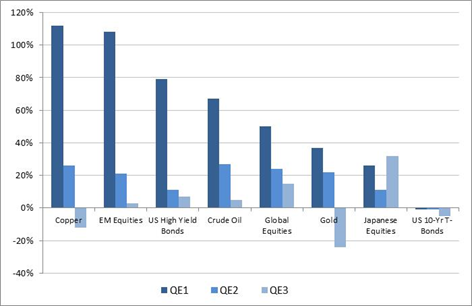
This greed doesn't lead to less global warming or happier people. I think politicians and economists should start thinking about what actually makes people happy. Economics is efficient management of resources nothing else. Giving the population ability to stay healthy with affordable health care, moderate taxes and stability should be a main priority.